
Item No.: 1690
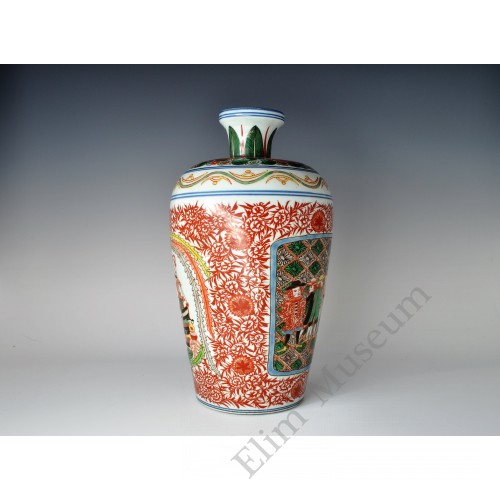
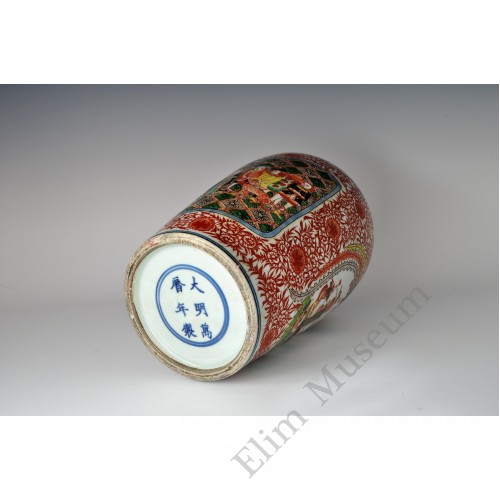
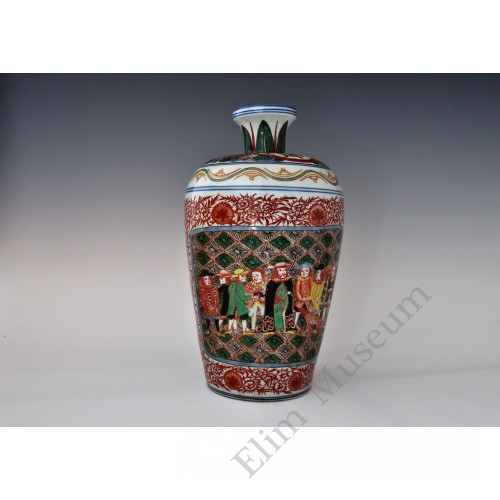
Wucai Meiping Vase with Western Figures, Bearing a “Da Ming Wanli Nian Zhi” Mark
Period: Ming dynasty, Wanli reign
Height: 30.0 cm
Among the wares listed for production at the imperial kilns during the Wanli reign, those depicting “All Nations Coming to Court” constitute one of the most distinctive categories. The Taoshu (Book of Ceramics), published in 1597, includes the phrase “萬古長春四海來朝面龍四季花人物” under the heading “Blue-and-White Ceramics on a White Ground Produced during the Wanli Reign.” This indicates that, by that year at the latest, the subject had already become a popular decorative theme on ceramics circulating in the market.
Such wares clearly carried a celebratory message: envoys from distant lands arriving to pay homage and present gifts highlighted the emperor’s wisdom and greatness, as well as the nation’s strength and prosperity. This wucai meiping vase, bearing the mark “Da Ming Wanli Nian Zhi” (“Made during the Wanli Reign of the Great Ming”), may well be a particularly representative example.
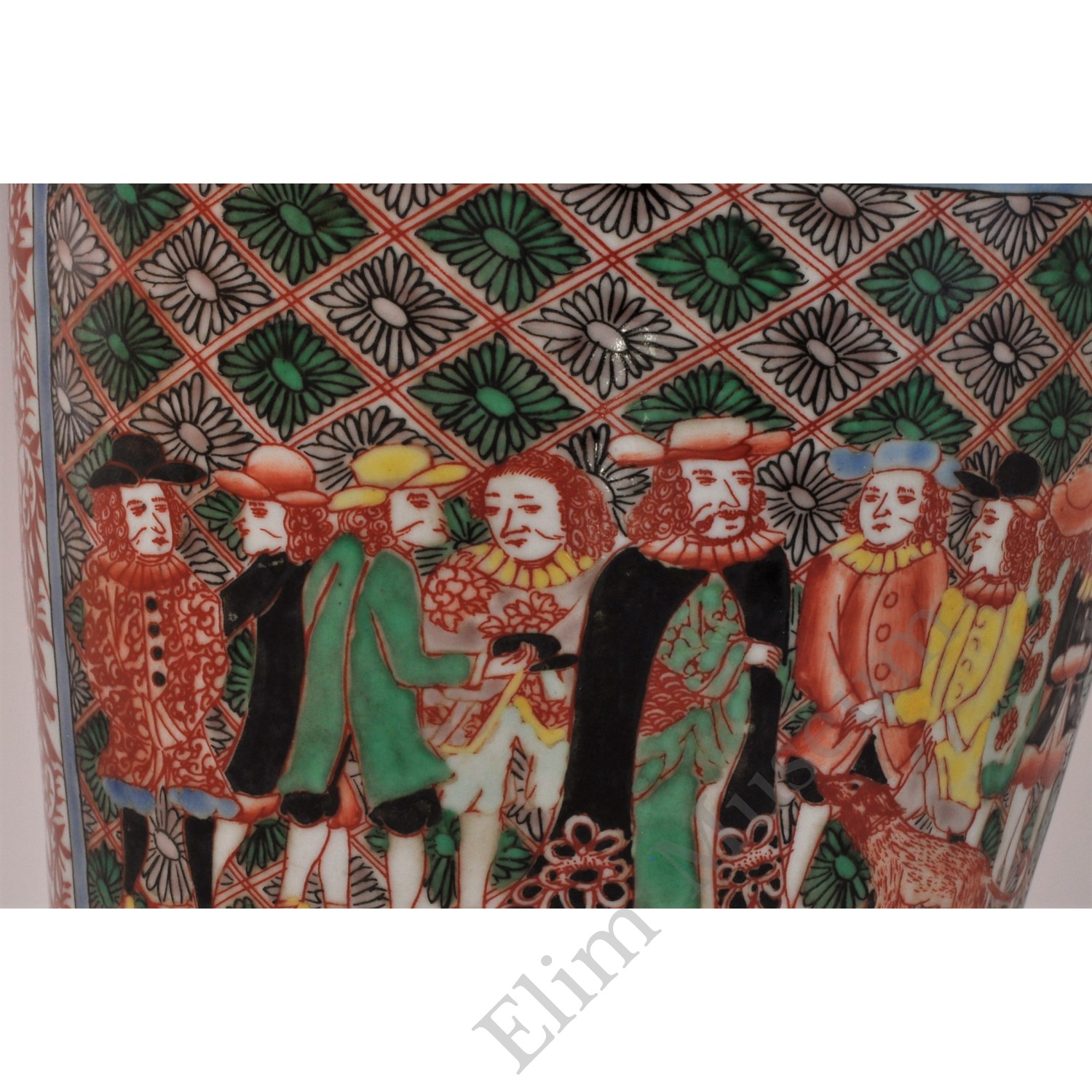
Its small mouth, short neck, broad shoulders, rounded body, and tapering lower section are characteristic of meiping vases of the Wanli period. Its most remarkable feature, however, is its documentary-style portrayal of a group of Europeans visiting China for the first time—a scene that may be exceptionally rare in the history of Chinese porcelain painting. Judging from their clothing and facial features, they appear to be white Europeans, possibly including secular figures of relatively high social standing, merchants, and Catholic missionaries.
The figures have large eyes, prominent noses, and narrow, pointed chins, conveying distinctly Western features as interpreted by the painter. They wear square caps or round, broad-brimmed hats, white or yellow ruffled collars, and brightly colored long garments, robes, and cloaks, with close-fitting stockings covering their lower legs. Together, these details create a striking foreign appearance, quite distinct from traditional Chinese dress, while offering clues to the figures’ identities and historical context.
The sailing ship displays several features characteristic of sixteenth-century European galleons: a relatively low bow, a high stern, a squared sterncastle, and three tall masts positioned forward, amidships, and aft. The painter’s attention to the vessel’s details is particularly striking. In addition to its tiered decks and rows of gunports along the hull, the scene includes what appears to be cannon fire, lending movement and vitality to this ocean-going vessel. These details suggest that the painter may have personally seen this distinctive type of ship, used for both commerce and warfare.
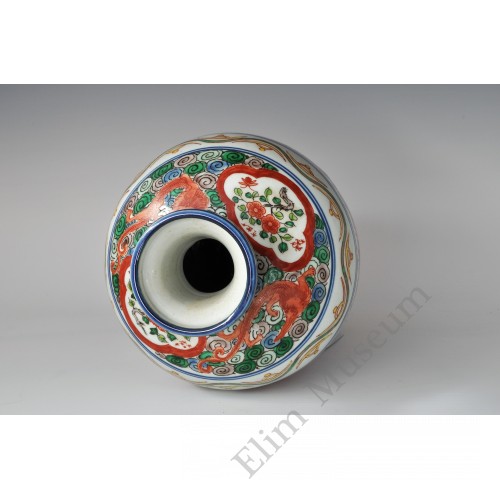
This meiping vase may well have been an imperial commission made at the command of the Wanli emperor. At the center of the composition, a phoenix spreads its wings, evoking the auspicious idea of “the phoenix arriving in majesty” and symbolizing a virtuous ruler, a realm united in allegiance, and visitors from distant lands coming to court. Although the work may have been intended to praise the emperor’s civil and military achievements, the painter employed an almost eyewitness documentary approach, carefully depicting the Westerners’ faces and clothing and the structure of their ocean-going ship. The result is a vivid portrayal of early exchanges between late Ming China, Europe, and the Catholic world. The vase may thus convey the political ideal of “All Nations Coming to Court” while also presenting the Western world as seen through Chinese eyes at the time: openness and exchange, in any era, can bring benefits to both sides.