

Item No.: 1668
Name: Large Square Wucai Vase with the Four Arts, Kangxi Period
Period: Qing dynasty, Kangxi reign
Height: 50.0 cm
This large square wucai vase has a flared mouth, a long neck, and flat shoulders above a tall, angular body. The rounded neck contrasts harmoniously with the sharply defined edges of the body. Its four sides resemble four upright painted screens, each depicting an elaborately dressed lady. The figures and the objects they hold evoke the Four Arts—qin music, weiqi, calligraphy, and painting—bringing refined cultural interests into the vase’s sumptuous decoration.
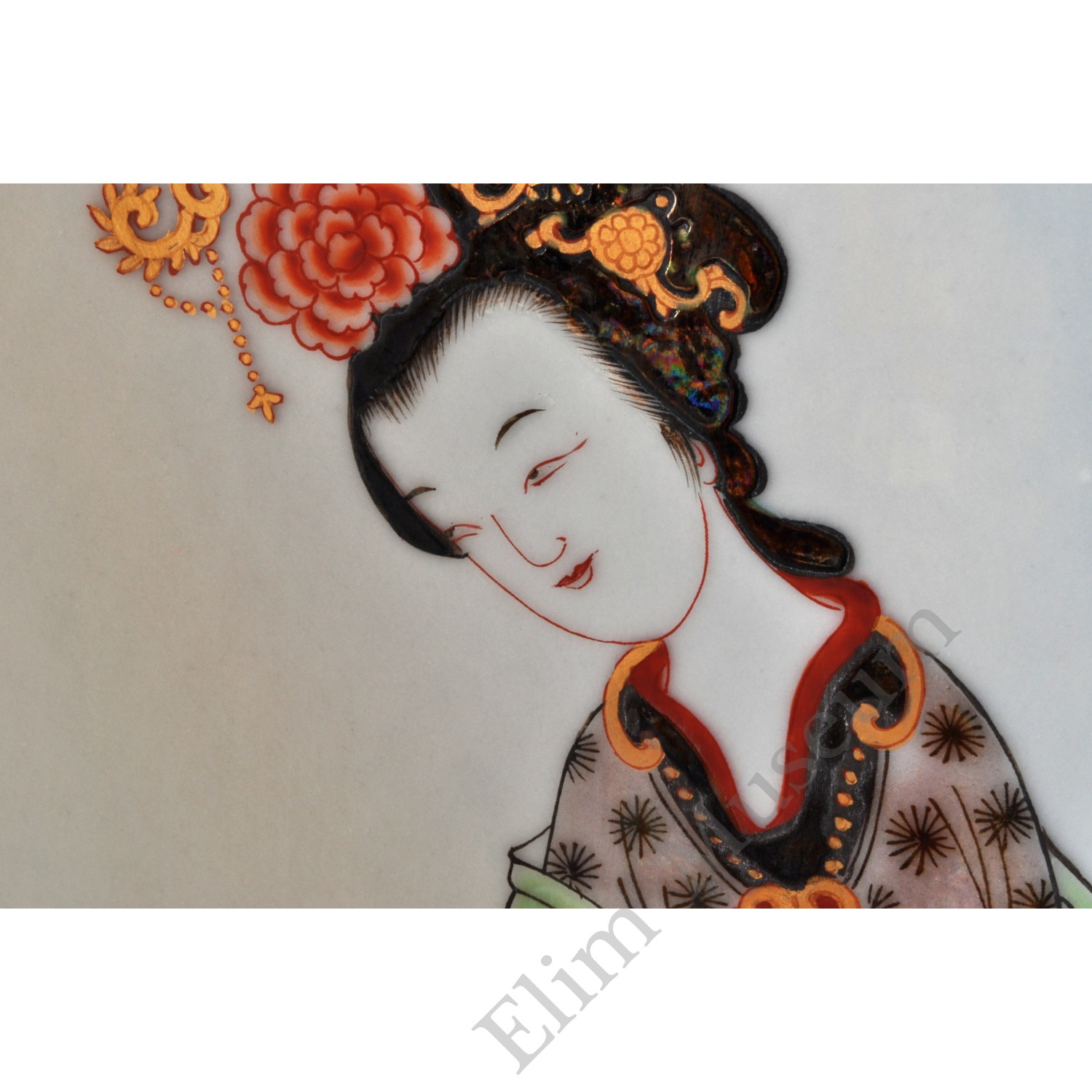
The ladies wear their hair in high coiffures adorned with flowers and gilt ornaments. Their wide-sleeved robes are complemented by flowing shawls and trailing sashes. Some incline their heads in contemplation, while others glance sideways with faint smiles; their slender fingers and poised gestures convey an unhurried elegance. Fine, assured lines delineate their brows, eyes, noses, and lips, while individual strands of hair are carefully rendered along the temples. The restrained treatment of their faces contrasts with the intricate patterns of their hair ornaments and garments, lending the figures a delicate yet lively presence. One lady cradles a qin in its brocade case, while another holds an exquisitely decorated book case, giving visible form to the ideal of cultivated accomplishment.
Red, green, yellow, blue, and purplish brown are combined throughout the decoration. Black coiffures and garment borders add depth, while touches of gilding enhance the sense of luxury. Lotus blossoms, chrysanthemums, flowering branches, and perforated garden rocks surround the figures, suggesting a secluded and elegant garden. Flowers and butterflies decorate the neck, while a finely patterned diaper ground on the shoulder sets off floral motifs and scholarly objects. These densely ornamented areas are balanced by the generous white ground of the body, creating richness without overcrowding.
During his reign, the Kangxi emperor pursued policies of harmony between Manchu and Han Chinese and of social and economic recovery. He placed particular emphasis on government through virtue, believing that governing a country required not only laws but also the cultivation of moral character and personal refinement among the people. The Four Arts symbolize the cultivation of traditional Han Chinese literati and can also express women’s talents and intellectual lives. The theme thus accords with the Kangxi court’s broader strategy of engaging Han Chinese society and advocating virtuous government. By embodying the Four Arts in four female figures, this work directs attention beyond beauty and dress to the knowledge, taste, and talent they represent. Each panel stands independently, yet the four connect as the vase is turned, together creating an ideal world in which flowers, cultivated accomplishment, and beauty coexist.