
Item No.: 1240 · Exhibition No. 25
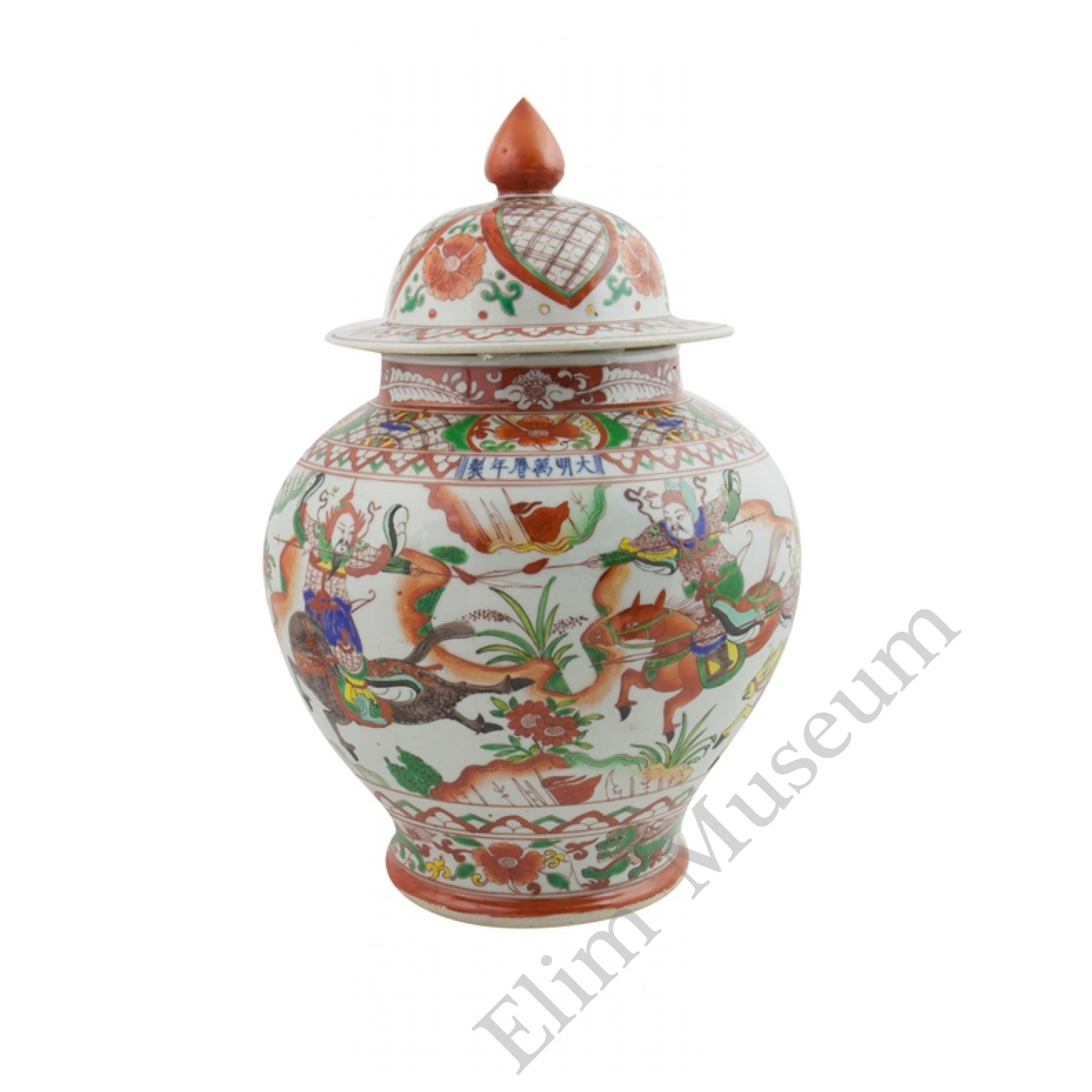
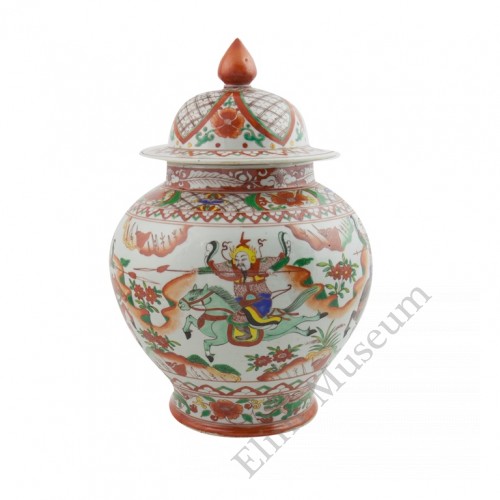
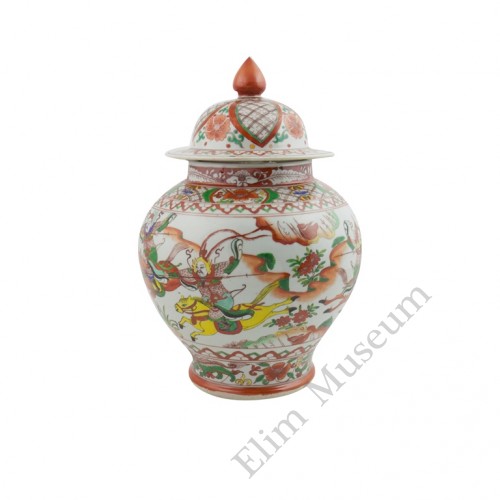
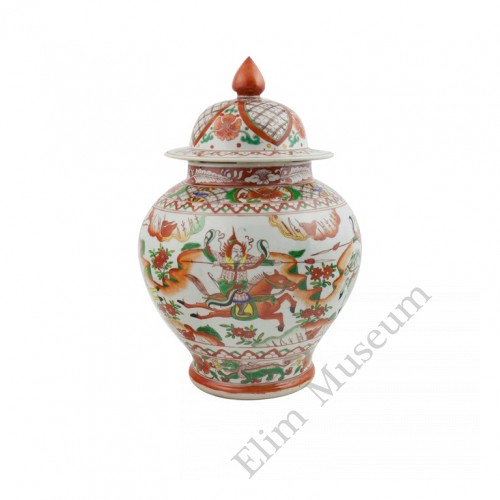
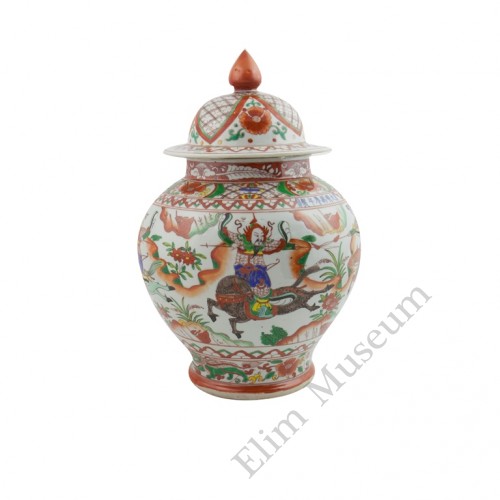
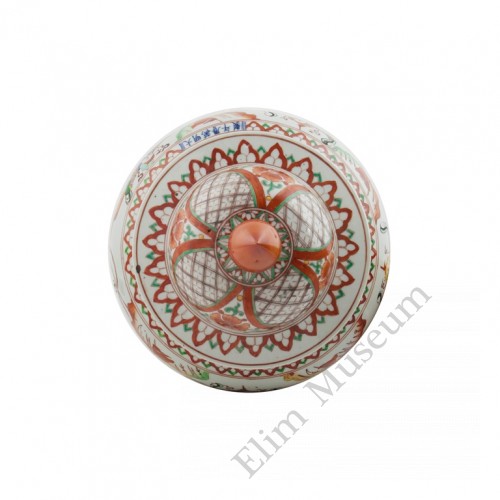
Wucai General Jar with Warriors on Horseback
Ming dynasty, Wanli reign
From the beginning of the Ming dynasty until the Jiajing and Wanli reigns, porcelain paintings depicting mounted warriors engaged in battle remain difficult to find. Dragons, phoenixes, flowers, auspicious animals, and other symbolic motifs were common on wares from both imperial and commercial kilns, while surviving examples with narrative figure scenes are relatively scarce. This situation gradually began to change during the Jiajing and Wanli periods.
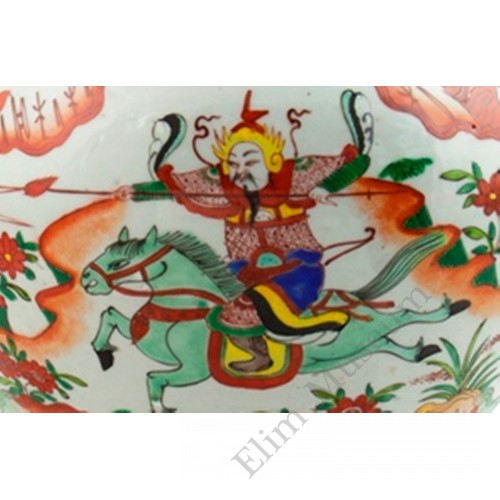
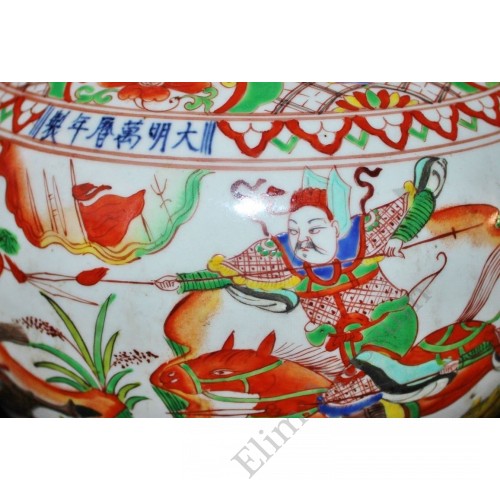
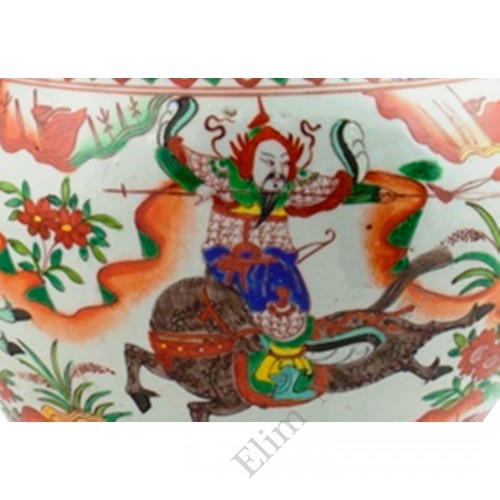
During the Jiajing and Wanli reigns, scenes of mounted warriors in battle reappear on surviving porcelains. An imperial porcelain order from the twentieth year of Wanli explicitly lists wucai wares decorated with narrative figure scenes, indicating the attention given to such subjects in porcelain production for the court. The Bowl with Battle Scene in the Metropolitan Museum of Art, New York (accession no. 17.146.2), dated by the museum to the mid-sixteenth century, provides a surviving example of battle imagery on porcelain from this period. Its figures, warhorses, banners, and rocky landscape form a narrative battle scene with notable affinities to the wucai general jar in our collection. Particularly striking are the similarities in the mounted warriors, red pointed helmets and outward-projecting helmet ornaments, the linear rendering of armor, and the combination of red and green enamels.
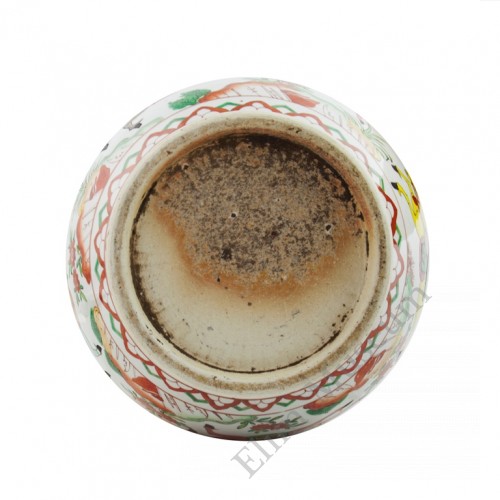
According to modern ceramic scholarship, the distinctive general jar form first appeared during the Jiajing and Wanli reigns. This wucai general jar in our collection brings together armored riders, galloping warhorses, and clashing weapons to convey the courage and martial vigor of soldiers confronting the enemy. Its broad, rounded body provides ample space for a battle scene, allowing the figures, horses, and surrounding landscape to unfold continuously around the vessel.
Considered in the context of the major foreign campaigns of the Wanli reign, this imagery naturally brings to mind the Ming intervention in Korea against the Japanese invasions, particularly the victory at Pyongyang in the twenty-first year of Wanli (1593). The imperial court attached great importance to this victory. Volume 276 of the Veritable Records of Emperor Shenzong records that, in connection with military achievements at Pyongyang and elsewhere, the emperor called for victory to be reported at the ancestral temple and formally proclaimed, with promotions and rewards granted according to merit. This demonstrates the Wanli Emperor’s intention to publicize military success and affirm his martial achievements through formal ritual.
Could this wucai general jar, then, have been specially commissioned by the court to commemorate the victory at Pyongyang? Might its maker have used the image of mounted warriors in combat to celebrate the achievements of soldiers resisting invasion, affirm the ruler’s prestige, and express the hope that warfare would be quelled and peace restored throughout the realm? This possibility merits investigation. Although no direct commissioning record or inscription on the vessel currently confirms it, the form, figural imagery, and historical context offer clues for further exploration of this interpretation.