
Item No.: 1151
Name: Large Kangxi Wucai Globular Vase with Sericulture Scenes
Period: Qing dynasty, Kangxi reign
Height: 49.2 cm
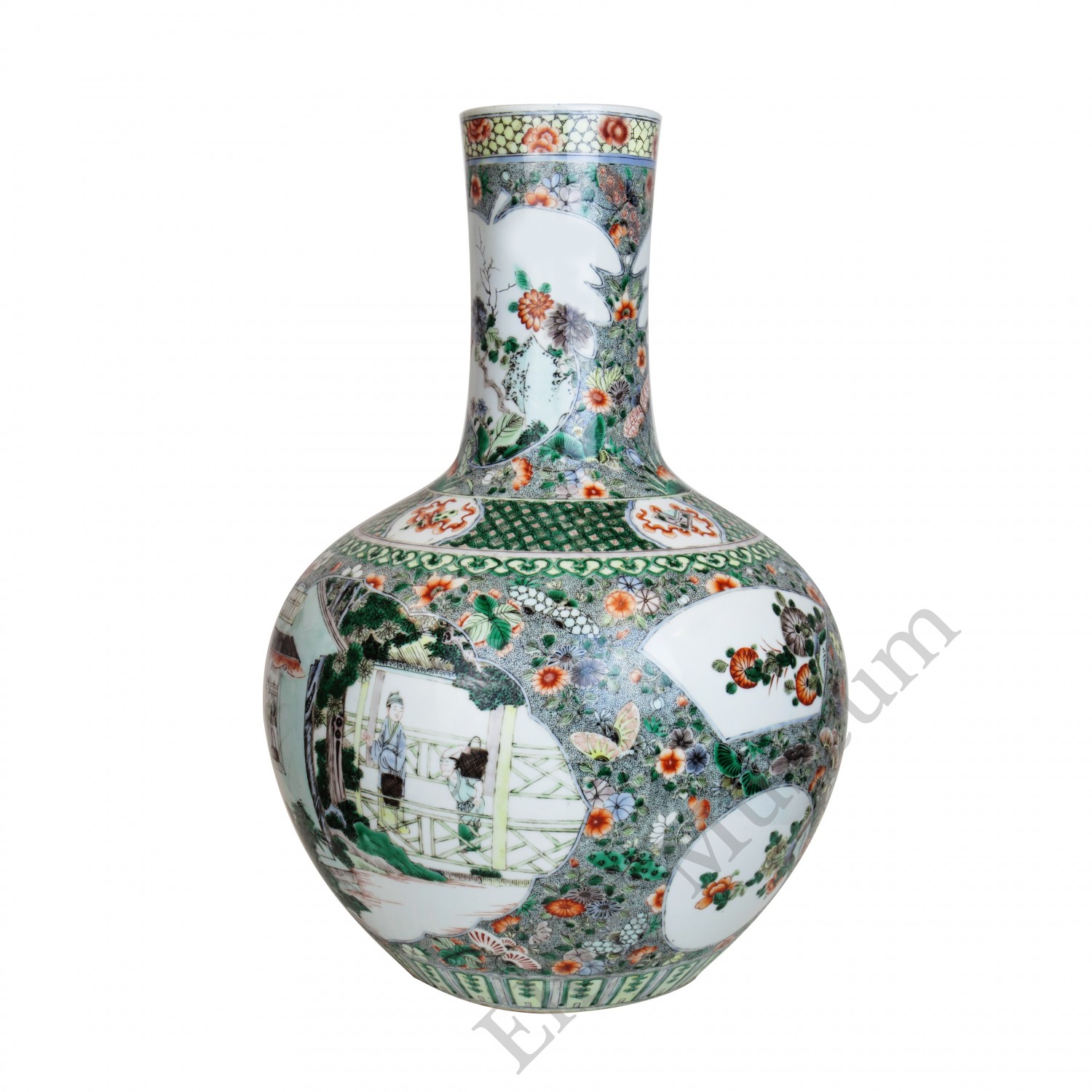
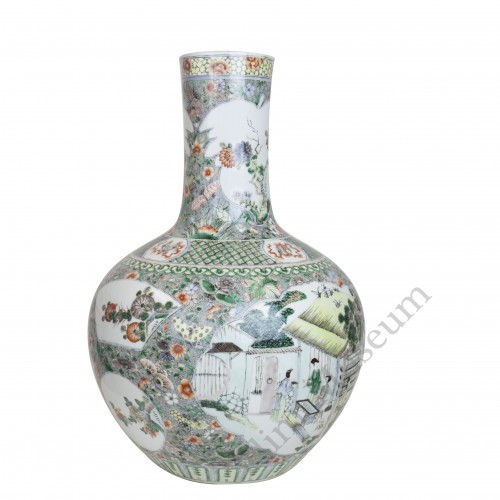
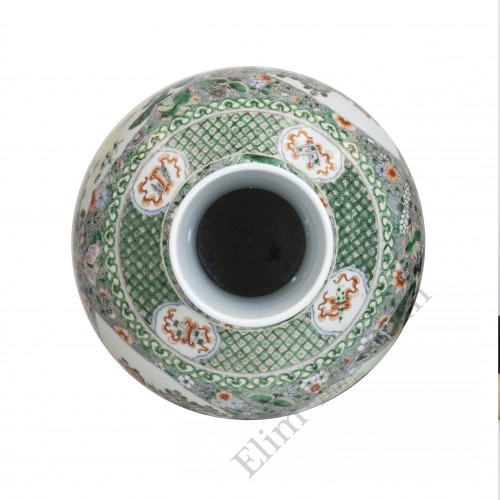
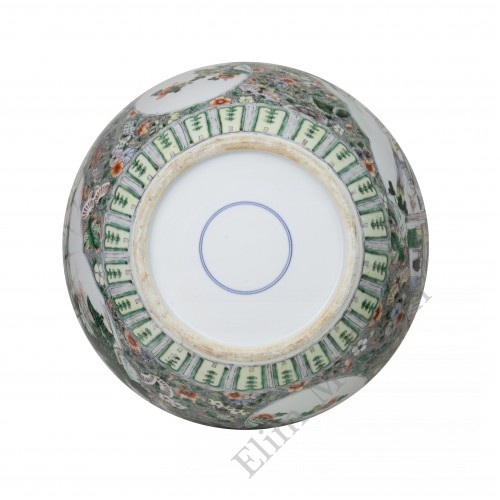
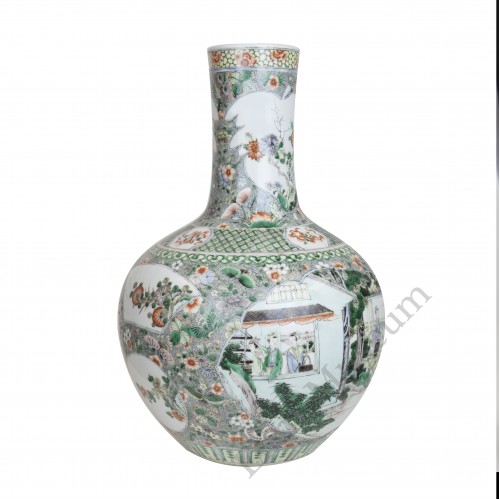
This large wucai globular vase has a tall, upright neck and a rounded body, giving it an imposing yet balanced form. Flowers, butterflies, diaper patterns, and auspicious motifs form a dense decorative ground, while reserved panels around the body depict scenes of sericulture. Brilliant colours complement the unassuming activities of daily life, placing silkworm rearing and cocoon gathering at the heart of the vessel's narrative.
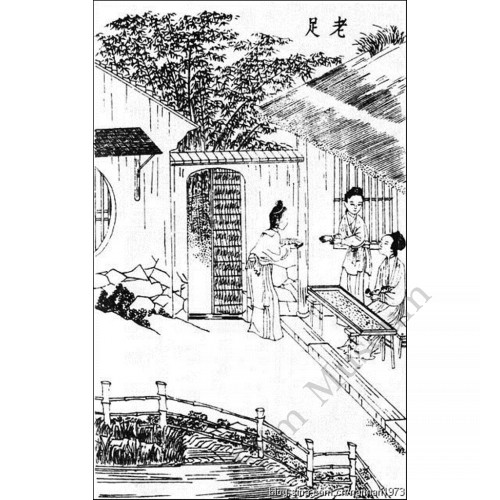
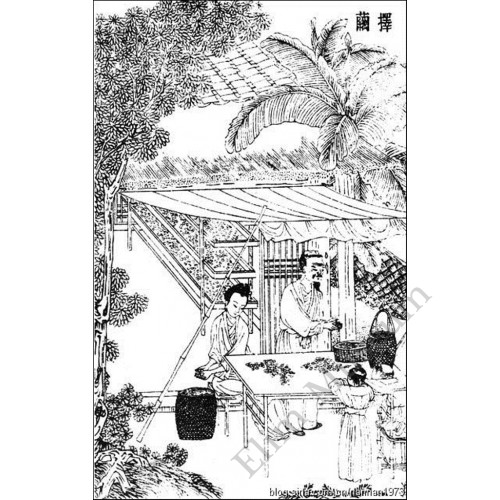
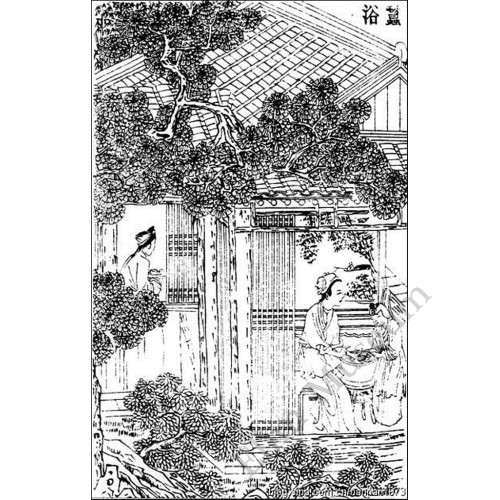
Following the collection's existing interpretation, the four figure scenes may be read counterclockwise as stages of “mature silkworms,” “gathering cocoons,” “sorting cocoons,” and “placing them in storage.” They relate to the sericultural processes described in the “Naifu” (“Clothing”) chapter of Song Yingxing's Tiangong Kaiwu (The Exploitation of the Works of Nature). “Mature silkworms” refers to the stage when the worms are ready to spin their cocoons. Comparison with the accompanying woodblock illustrations reveals notable correspondences in courtyard walls, doors and windows, sericultural equipment, and the arrangement of figures passing objects or working together. In particular, the placement of figures and the courtyard layout in the “mature silkworms” scene are closely related, suggesting that the painter may have drawn upon such imagery, adapting and rearranging it to suit the vessel's curved surface and the shapes of its panels.
The figures bend to inspect their work, reach to lift objects, or carry baskets, their movements unfolding naturally around the tasks of sericulture. Houses, railings, and courtyard trees connect the different work areas, presenting an ordered domestic life sustained by cooperation. Some figures smile and exchange glances, lending the busy scenes a sense of pleasure in the approaching harvest. Beyond recording practical procedures, the painter conveys anticipation of the rewards of labour and the reassurance of having food and clothing provided for.
The subject accords with the Kangxi emperor's emphasis on agriculture and sericulture as foundations of good government. In his Essay on Agriculture and Sericulture, he wrote: “Farming provides food; sericulture provides clothing. Harm to farming is a source of hunger; the abandonment of women's textile work is a source of cold.” In this view, cultivation and silk production meet people's most basic needs and underpin social stability. The vase's scenes can therefore be understood within a broader concern for encouraging productive work and sustaining livelihoods: sumptuous fabrics depend on painstaking, continuous labour, and seemingly ordinary household production is closely connected with the governance of the state.
The ornament is equally inventive. Beyond the figure panels, red, green, yellow, blue, and purplish-brown enamels interweave among overlapping flowers and foliage, with butterflies and moths passing between them. Fan-shaped and other irregular floral reserves punctuate the surface. The dense coloured ground contrasts with the more open white spaces within the panels, allowing the narrative scenes to remain clearly legible amid the rich decoration. Diaper patterns at the shoulder, a ruyi-shaped border, and a band of upright motifs near the foot organize the decorative layers and give the vessel a unified appearance.
Particularly striking are the fine black dots filling the spaces between the flowers and leaves. Their texture resembles a fish-roe ground and sets off the crisp outlines of blossoms and winged insects. Viewed in relation to the sericultural subject, some of the butterflies and moths may evoke silk moths emerging from their cocoons, while the dense stippling may invite further associations with silkworm eggs and the renewal of life. These possible meanings connect the surrounding ornament with the figures' work. The vase brings together knowledge of sericulture, the beauty of labour, and agrarian ideals in richly coloured porcelain painting, giving a grand display vessel an enduring concern with everyday livelihoods.