
Item No.: 1136
Name: A pair of wucai figures of boys holding lotus flowers
Period: Qing dynasty, Kangxi reign
Height: 24.0 cm
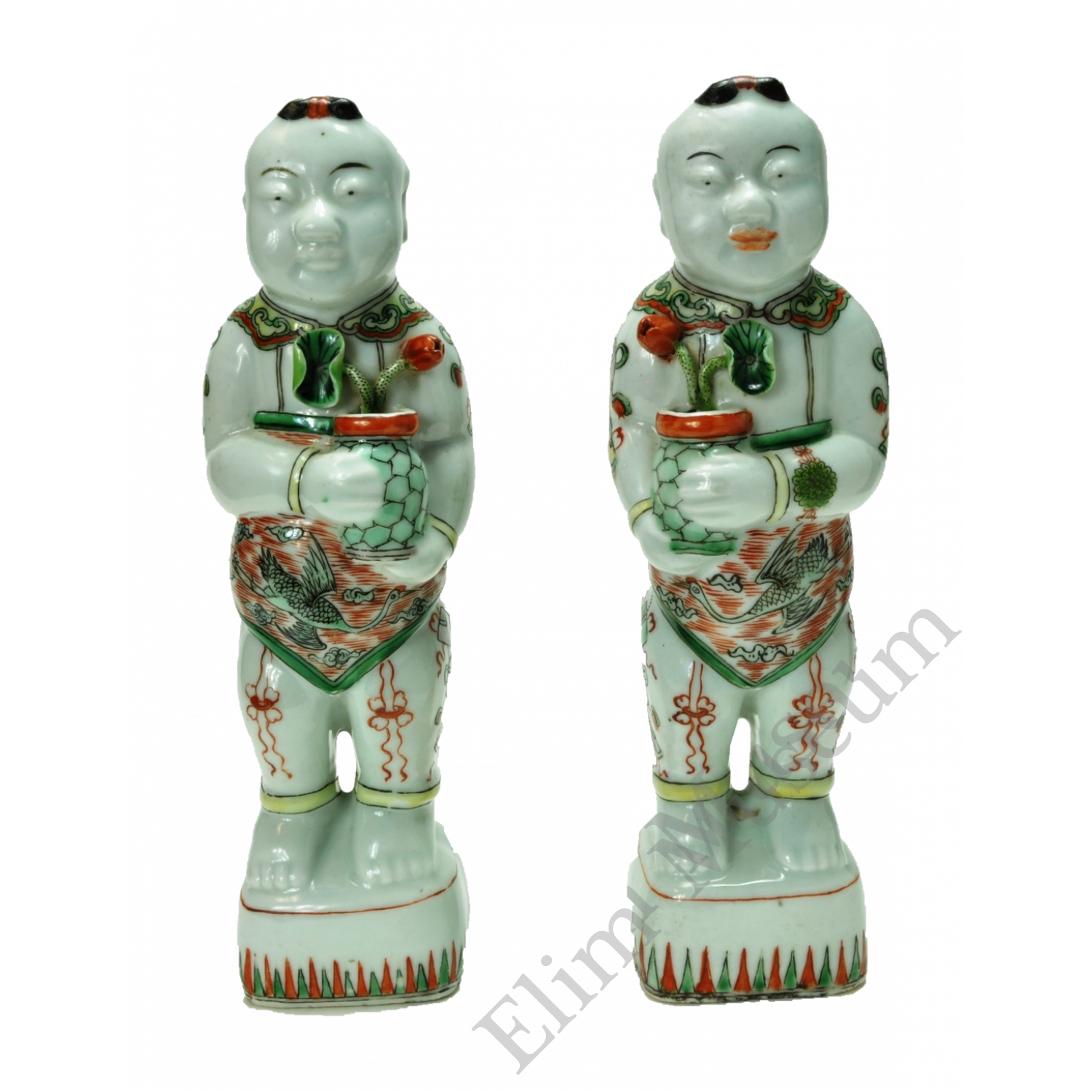
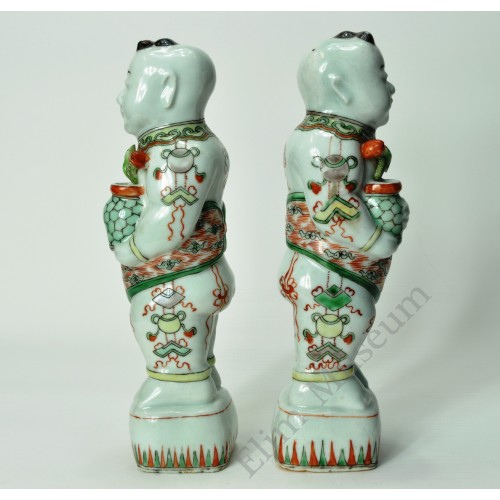
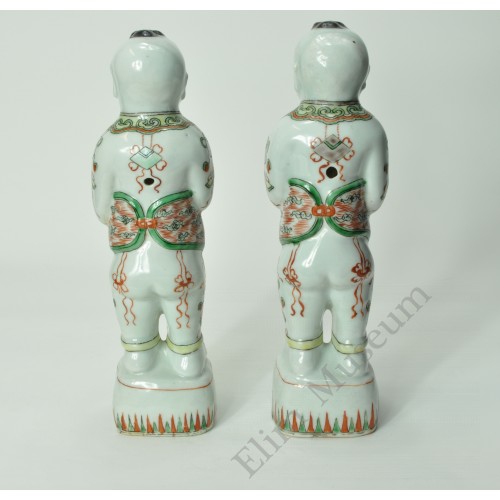
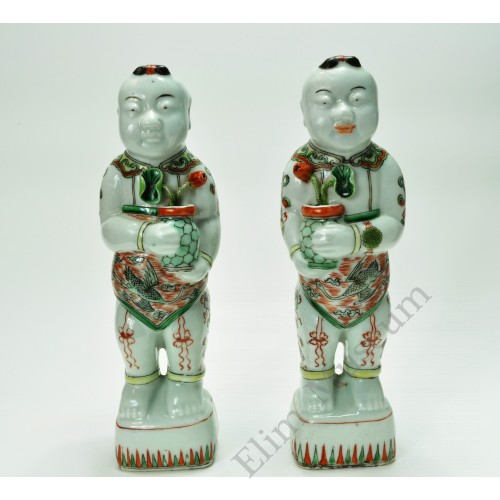
This pair of wucai porcelain figures of boys holding lotus flowers dates to the Kangxi reign of the Qing dynasty. The boys stand side by side, with rounded faces and joyful expressions, holding lotus flowers in both hands before them. Their similar poses and individually decorated garments give the pair both unity and variety, creating a festive and welcoming presence.
The boys’ bellybands are painted with egrets, echoing the lotus flowers. Through the Chinese homophones lu (egret and road) and lian (lotus and successive), these motifs convey the wish for “success in successive imperial examinations.” The two lotus flowers carry several further meanings: paired with children, they express the hope for “the successive birth of distinguished sons”; the homophony of he (lotus and harmony) also lends the paired figures associations of harmonious union, marital happiness, and family concord.
What is evident is that auspicious porcelain sculptures of this kind reflect a gradual shift in China’s indigenous religions after the Ming dynasty: the pursuit of transcendence over suffering and the salvation of life increasingly receded into a secondary position, while greater emphasis was placed on satisfying worldly, utilitarian desires, such as advancement in office, the accumulation of wealth, and the flourishing of descendants.
Correspondingly, the portrayal of distinctive individuality and complex emotion also tended to diminish. The figures increasingly served as vehicles for auspicious meanings, while their faces and bodily poses became more conventionalized. Although the two boys appear cheerful, they reveal little of a unique inner world. What we see in them is more an expression of shared worldly aspirations than the rich and authentic feelings of particular human lives.