
Item No.: 1195
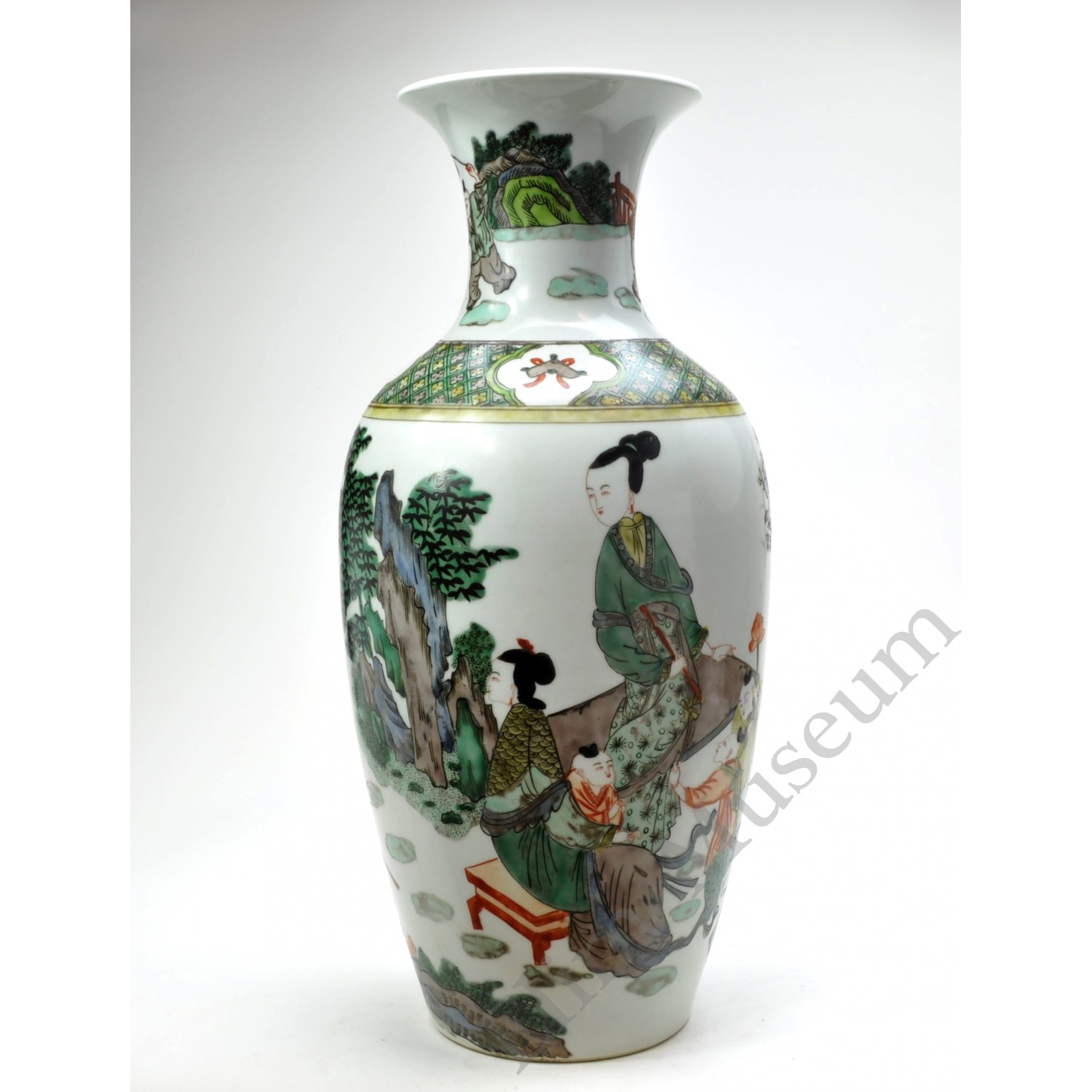
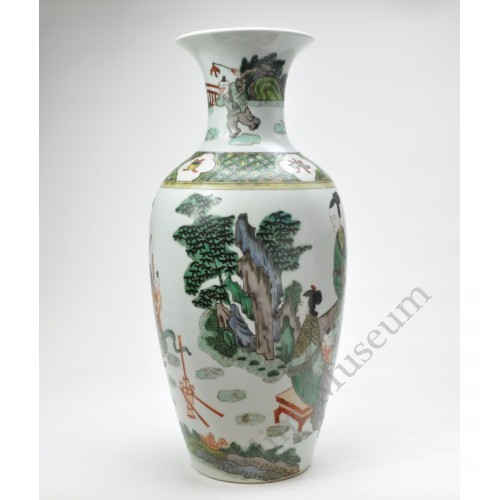
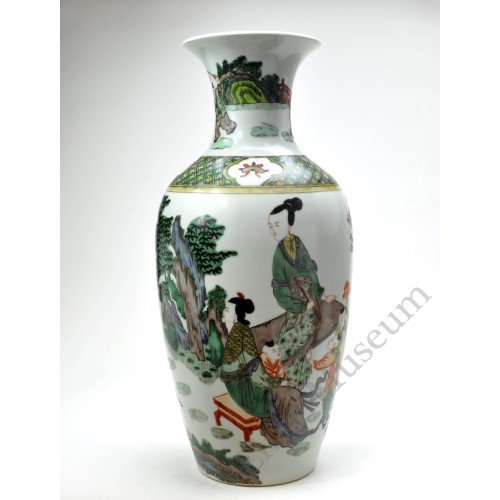
Name: A large wucai vase with figures playing touhu, the arrow-tossing game
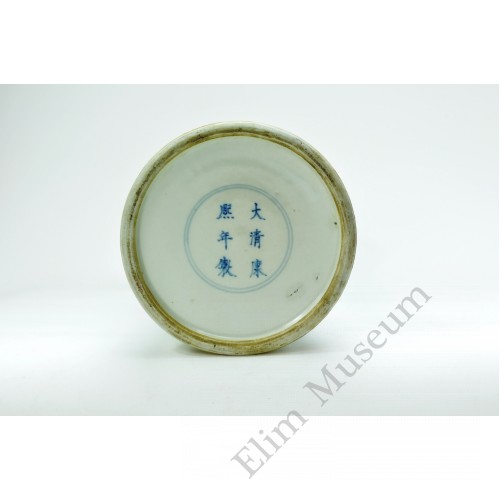
Period: Qing dynasty, Kangxi reign
Height: 43.3 cm
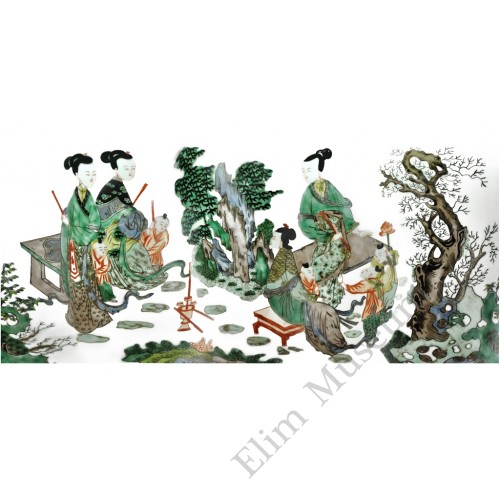
The museum interprets this scene as a symbolic reference to the early Qing rulers’ efforts to attract members of the former Ming elite. Three richly dressed women occupy the elevated position of hosts, while a more constrained visiting woman sits below with a young boy. In this reading, differences in their garments and collars suggest contrasting Manchu and Han identities, and the visitor’s yellow dragon-patterned vest evokes a connection with the former Ming imperial family.
The three hosts look down at the visitor with expressions that seem difficult to read. The Chinese commentary proposes that their number may allude to three successive rulers—Hong Taiji, Shunzhi, and Kangxi—and the transfer of dynastic power. These are interpretations of the imagery rather than identifications established by an inscription.
The game is touhu, in which players throw arrows into a vessel. The visitor and her child have no arrows left; three have been thrown, with two missing their target, while the opposing players still hold theirs. The commentary reads this imbalance as a possible metaphor for the Ming dynasty’s exhausted fortunes. A rock partly obscuring the visitor’s face is likewise interpreted as an image of reaching an impasse.
One of the hosts’ boys appears to invite the visiting child to join them. A well-dressed youth holding a lotus stands behind him. Through the sound association between lotus and successive advancement, the commentary interprets this figure as promising status and prosperity to those willing to enter the new ruling order.
Seated and standing figures gather in a garden, with adults and children connected through glances, proximity and gestures. Under the museum’s touhu title, the scene relates to a throwing game with longstanding associations with etiquette and social gatherings. The visible view emphasizes relationships among participants rather than an unmistakable moment of throwing an arrow.