Item No.: 1151
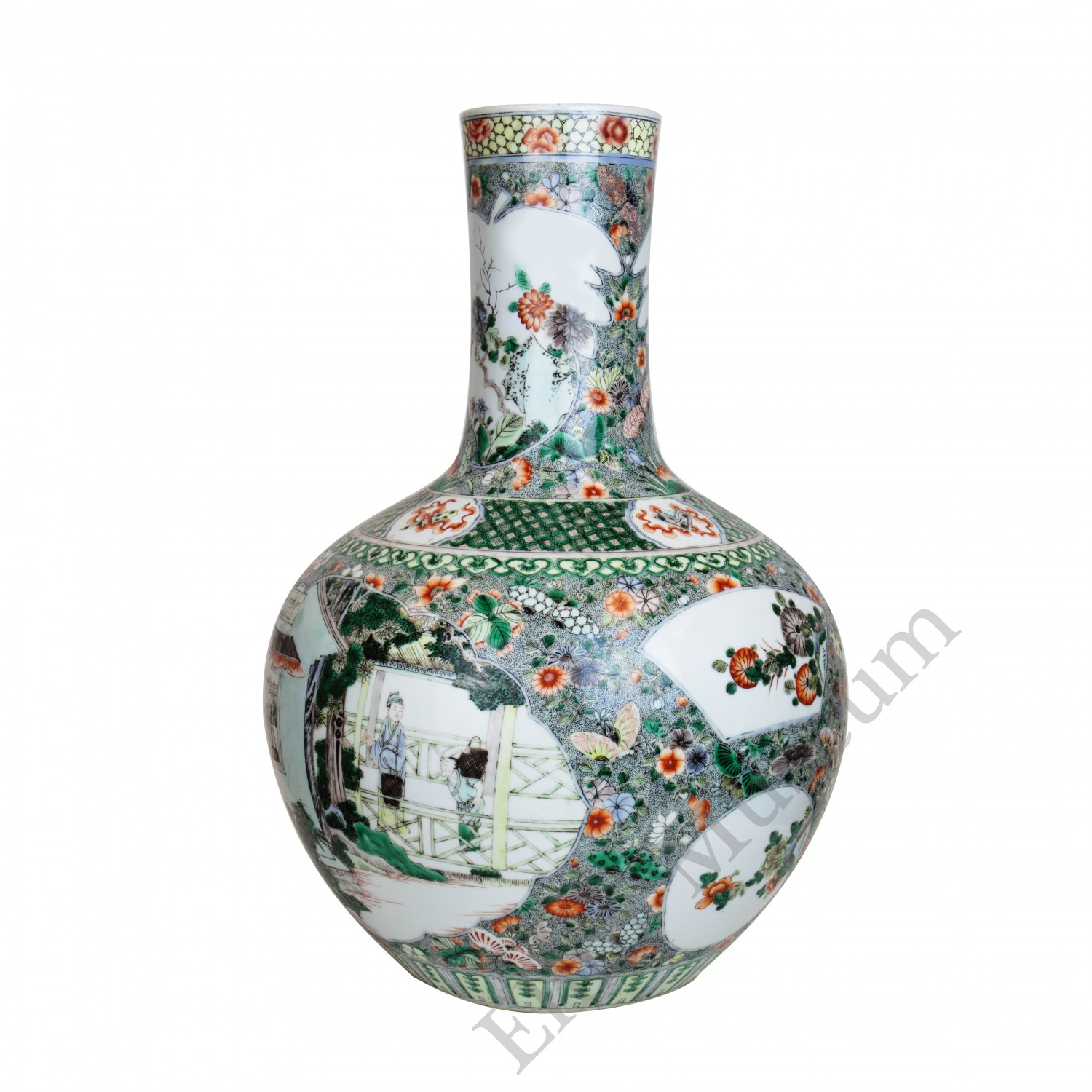
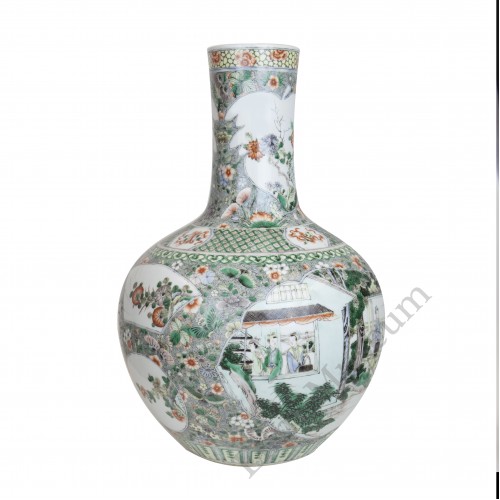
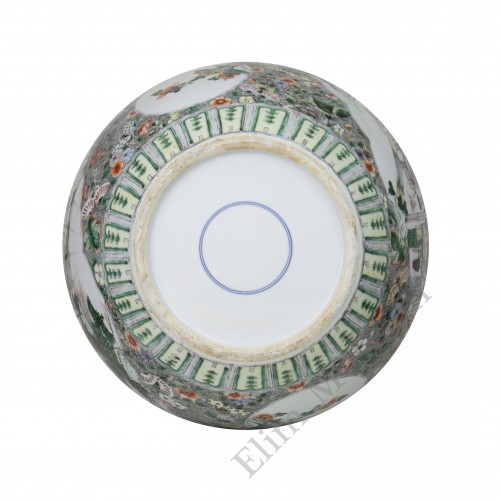
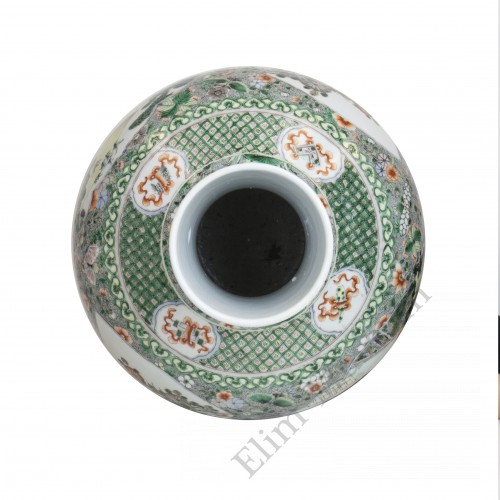
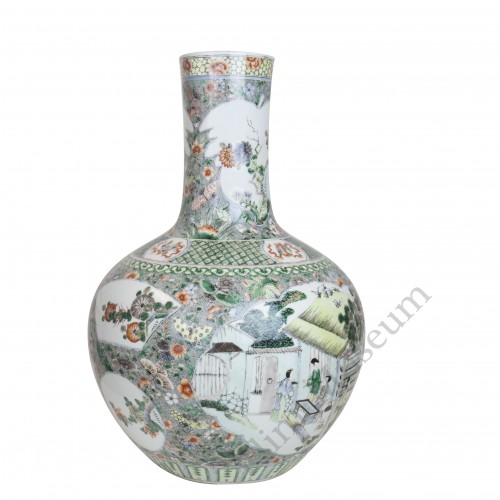
Name: A large wucai globular vase with sericulture scenes from Tiangong Kaiwu
Period: Qing dynasty, Kangxi reign
Height: 49.2 cm
In his essay on agriculture and sericulture, the Kangxi emperor emphasized that farming provides food and silk production provides clothing: neglect of either brings hunger or cold. The Chinese commentary reads this vase, like the Painting of the Imperial Sericulture Ceremony in the National Palace Museum, Taipei, as conveying the importance of those activities to good government.
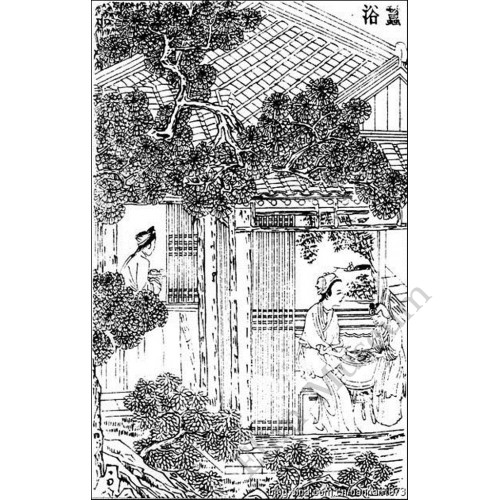
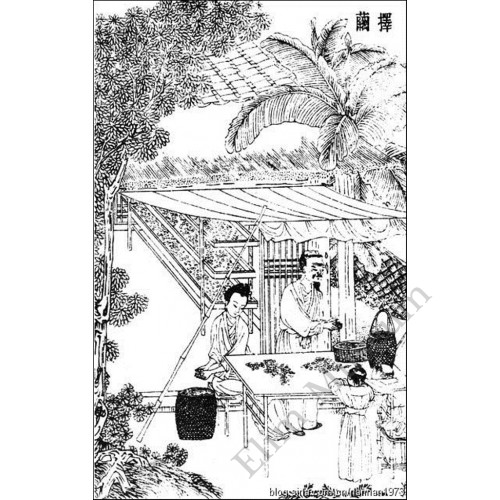
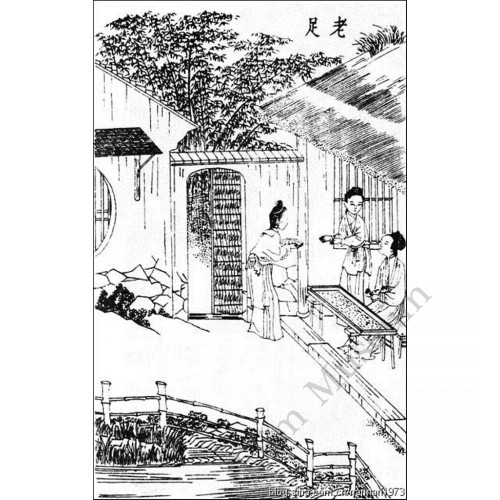
The principal scenes are identified with the section on silkworm raising and silk production in Song Yingxing’s Tiangong Kaiwu, published in 1637. Read counterclockwise, the four scenes concern mature silkworms, collecting cocoons, sorting cocoons, and placing them in storage. The first two appear to follow illustrations in Song’s book directly; the figures in the latter two show the pleasure of a successful harvest.
The vase combines an imposing form with rich, intricate ornament. Auspicious motifs and flowers fill the background, while newly emerged silk moths flutter across the surface in wucai colors. Dense black, roe-like dots add a distinctive texture that the commentary also relates to the silkworm life cycle.
Figures bend, lift and carry baskets in coordinated scenes of work associated with silk production. Their practical movements make labor and its rewards worthy subjects of decoration. Catalogued in relation to the sericulture section of Tiangong Kaiwu, the vase connects technical knowledge and agrarian values with the ornamental language of ceramic painting.