
Item No.: 1056
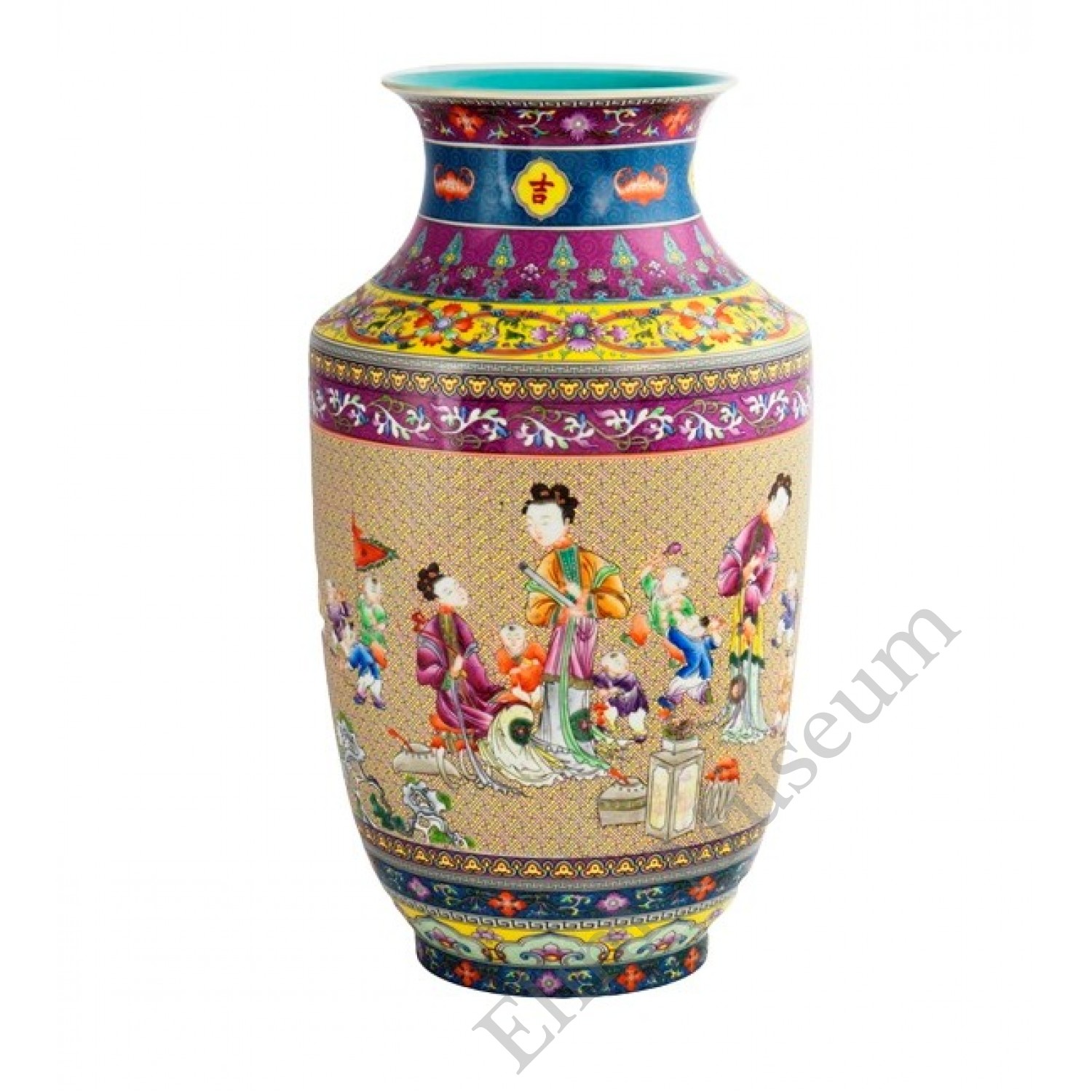
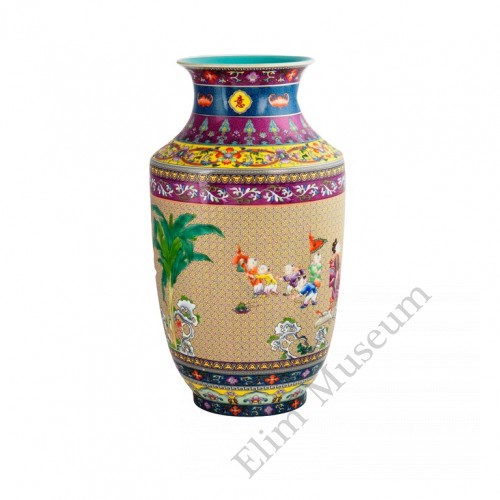
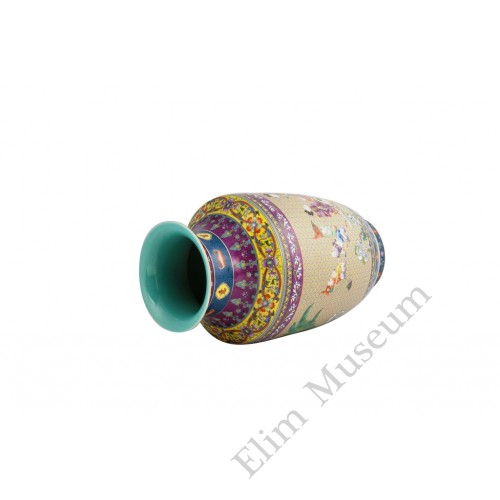
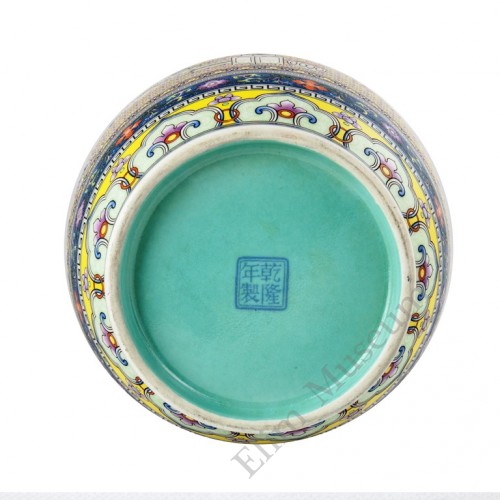
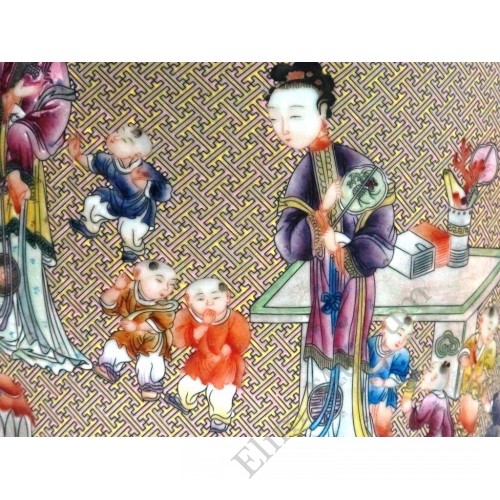
Name: A yangcai lantern vase with the Four Consorts and Sixteen Sons motif
Period: Qing dynasty, Qianlong reign
Height: 36.1 cm
The “Four Consorts and Sixteen Sons” motif is sometimes said to depict the Qianlong emperor’s consorts and descendants. The Chinese commentary, however, traces its meaning to earlier traditions. Gao Cheng’s Song-dynasty Shiwu Jiyuan records four consort ranks below the empress in the early Tang dynasty: gui, shu, de, and xian. Other historical traditions identify the four consorts as Leizu, Nüjie, Tongyushi, and Momu, or alternatively as Anyuanshi, Jiandi, Chenfengshi, and Nüquzishi.
The “Sixteen Sons” are associated in the commentary with sixteen worthy ministers of the legendary rulers Yao and Shun. Rewarded with clan names for their service, they were also known as the Sixteen Clans or Sixteen Ministers. Following the population losses of the late Ming wars, the Qing rulers from Kangxi to Qianlong encouraged population growth through policies described as adding people without adding taxes. The vase’s imagery is therefore interpreted as a general wish for good government, family happiness, and abundant descendants, rather than a portrait of a particular imperial household.
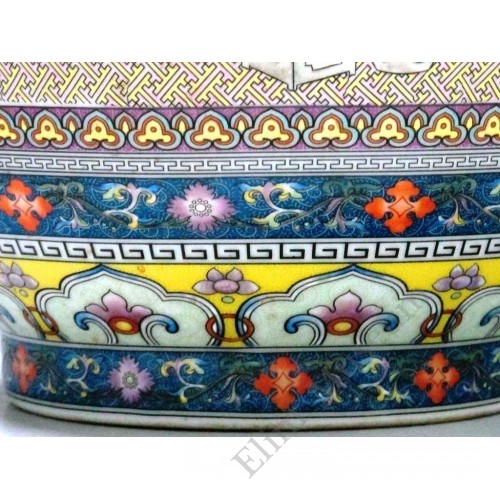
The decoration is exceptionally elaborate. Alongside the main figure scene, ten ornamental registers run from top to bottom, including scrolling flowers, auspicious bats, banana leaves, ruyi forms, and Western-style chrysanthemums. The Chinese commentary suggests that the ten registers may evoke complete perfection and serve as praise of imperial rule.