


Item No.: 1596
Name: Ming Blue-and-White Porcelain with Ladies in a Garden
Period: Ming dynasty, Xuande reign
Height: 12.9 cm
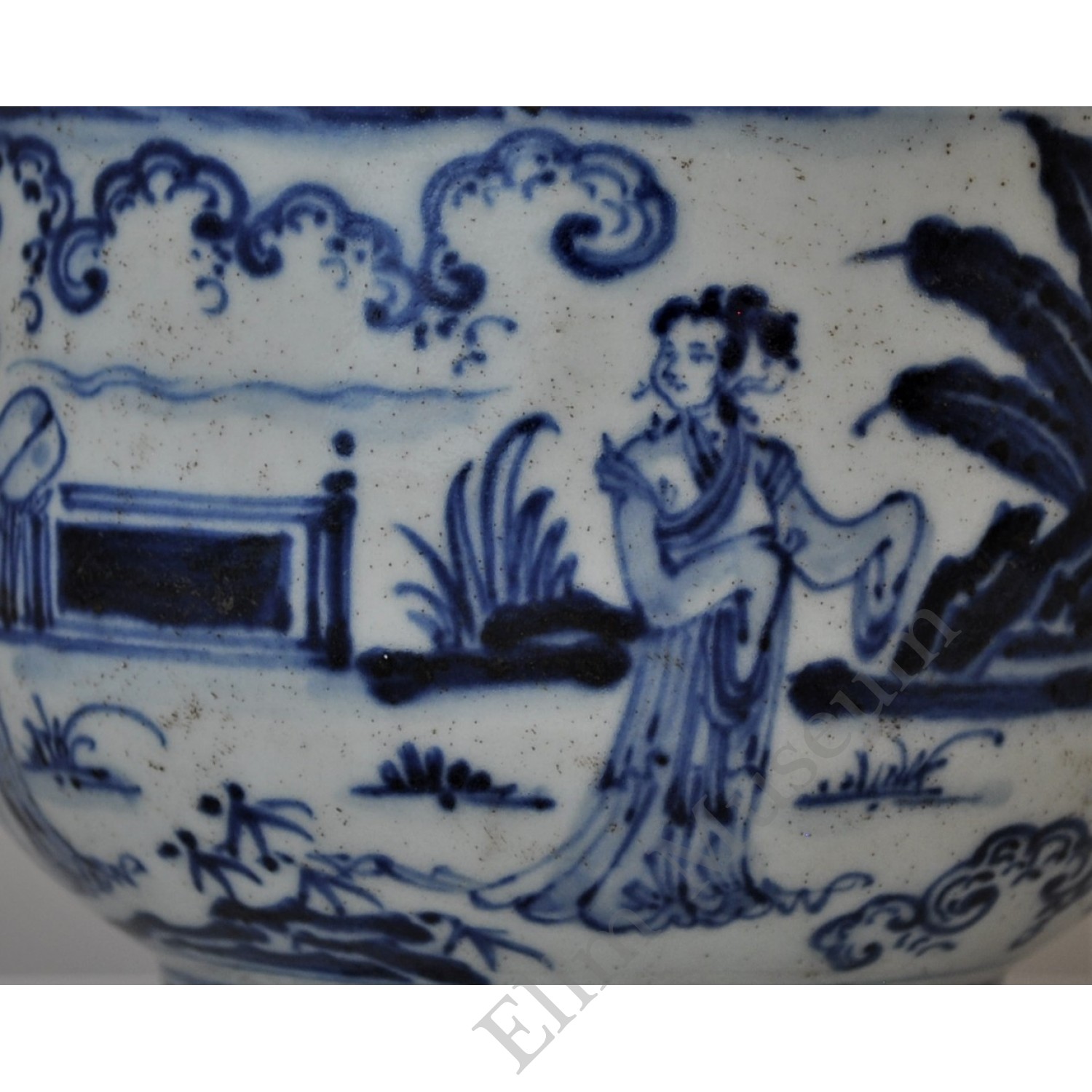
This bell-shaped blue-and-white bowl, bearing the mark “Made in the Xuande Reign of the Great Ming,” depicts three women in a garden in a continuous scene encircling its exterior. Balustrades, pavilions, and ornamental rocks define a secluded setting, with spreading banana leaves and drifting clouds. The women wear their hair in high coiffures and long skirts that trail to the ground. One holds an elongated object horizontally in both hands, apparently carrying a qin; another stands holding a fan. Beside the banana plant, a third woman turns her head and raises a hand, as though greeting or conversing with her companions. Their relaxed, mutually responsive poses evoke a life of refined leisure.
The cobalt decoration alternates between rich and pale tones, contrasting the dark banana leaves and rocks with the delicate folds of the women’s garments. Broad areas of undecorated porcelain lend the garden a sense of openness, while curling clouds introduce an ethereal quality into the everyday scene. Inside the bowl, pine, bamboo, plum blossom, orchids, lingzhi fungi, and rocks echo the garden on the exterior. A band of key-fret ornament around the foot provides an orderly boundary to the flowing composition. The vessel is painted with the characteristic imported cobalt pigment known as “Sumali blue,” producing particularly striking contrasts between deep and light shades.
Figural subjects were rarely seen in porcelain painting during the Hongwu and Yongle reigns. Only in the Xuande period did this situation begin to change, as imperial-kiln porcelains depicting court life gradually appeared. This bell-shaped blue-and-white bowl is a representative example. Such works generally remain removed from the realities of wider society, focusing instead on the leisurely, elegant activities of imperial family members and palace women within the palace walls: admiring the moon, composing poetry, playing the qin, or drinking tea. Their imagery emphasizes poetic refinement and an air of detachment from worldly concerns. The forceful porcelain paintings of the late Yuan period, with their vividly individual figures and dramatic tension, would not be seen again for a long time.
This change was closely connected with the stringent legal prohibitions of the Ming dynasty. During the Hongwu reign, the court issued decrees strictly restricting the use of images depicting ancient emperors, empresses, imperial consorts, sages, and worthies, as well as stories concerning them, on the utensils and clothing of officials and commoners. Laws governing theatrical performance also prohibited the portrayal of certain figures vested with political or ritual authority. At the same time, however, exemptions were made for subjects involving filial sons, obedient descendants, righteous husbands, chaste wives, and the encouragement of virtuous conduct, leaving room for such themes to be represented. As a result, the subject matter of figural art shifted away from the fate of the nation, social conflict, and human experience in times of upheaval, toward imperial and aristocratic life, garden pleasures, and poetic refinement—subjects that presented an idealized image of peace and prosperity.