
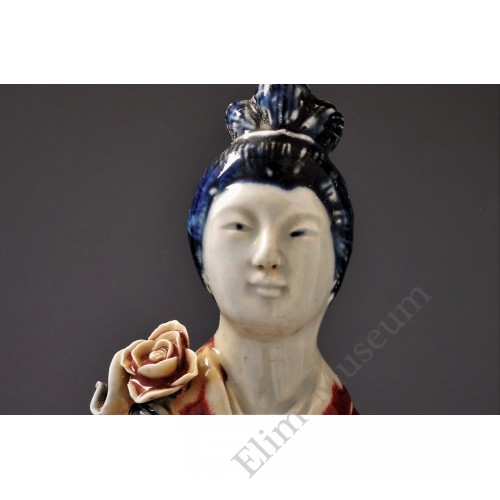
Item No.: 1729
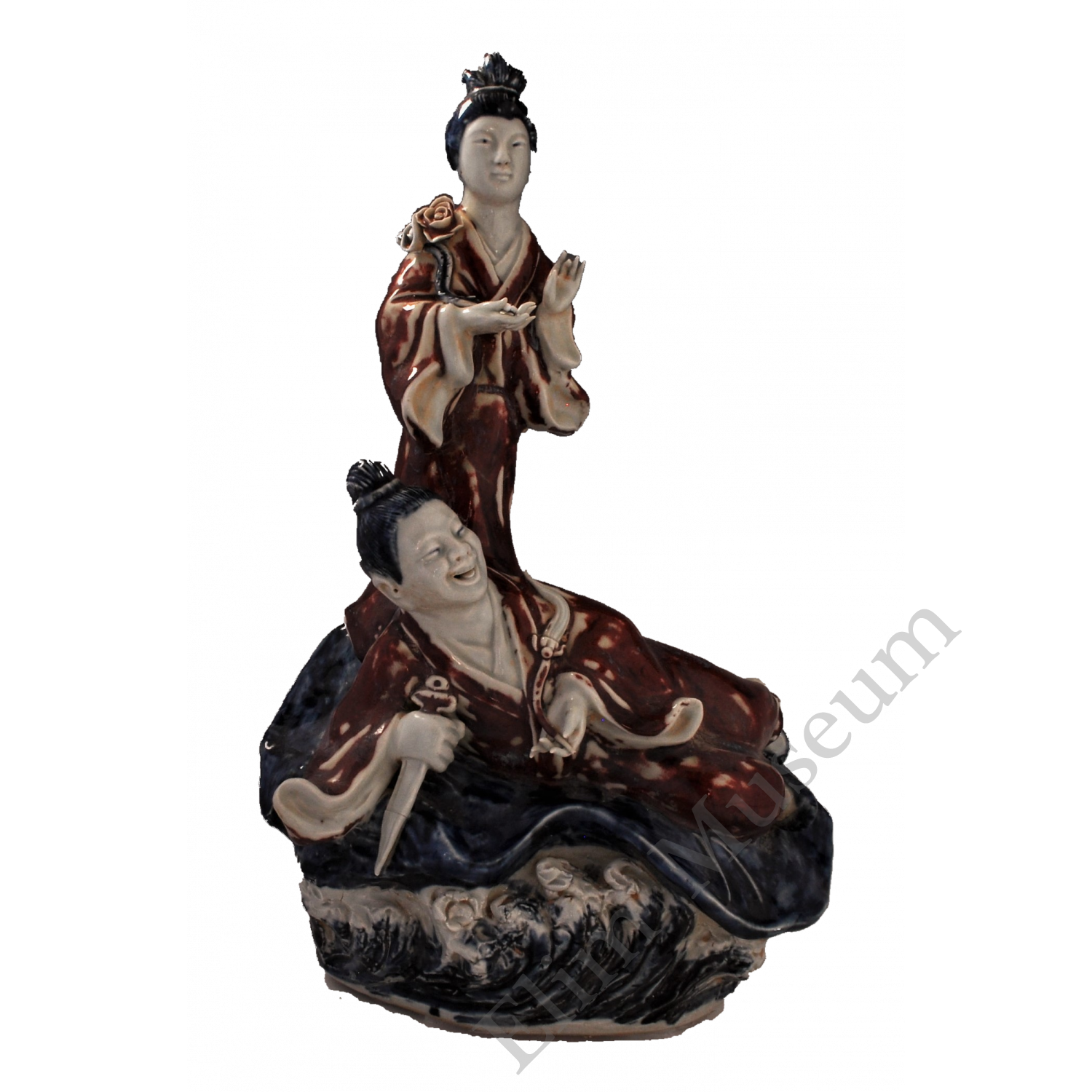
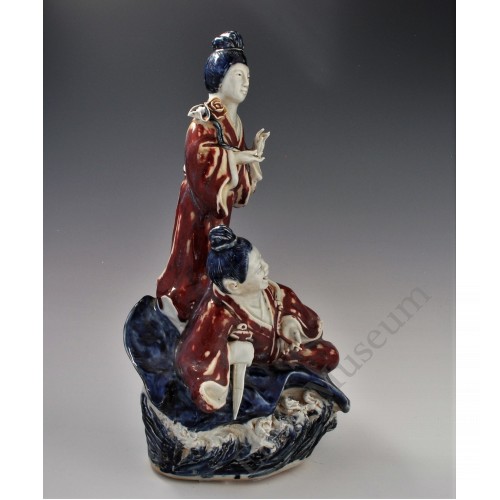
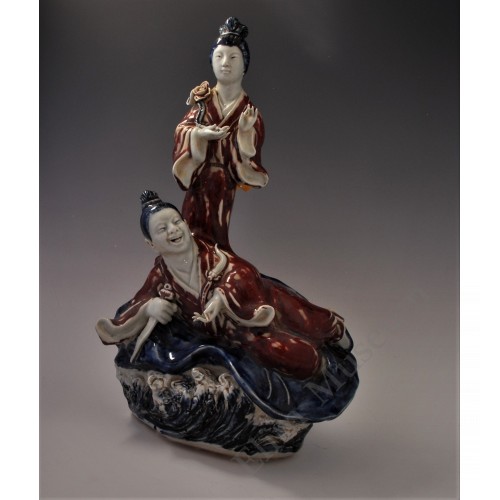
Name: A blue-and-white and underglaze-red sculpture of Lü Dongbin and He Xiangu
Period: Yuan dynasty
Height: 29.2 cm
Across many of the world's religions and popular beliefs, we find a recurring passage from the human to the divine: people invest certain individuals with powers beyond the ordinary and with sacred qualities, gradually transforming them into revered deities. This phenomenon is particularly common in Chinese popular belief. The stories of the Eight Immortals center on ordinary mortals attaining transcendence, expressing the longing to rise above suffering and enjoy a life of spiritual freedom, while retaining the personalities and pleasures of the everyday world.
During the Jin and Yuan dynasties, the Quanzhen school of Daoism gradually flourished. Genghis Khan's esteem for and support of Qiu Chuji further enhanced the school's standing. Quanzhen revered such immortals as Zhongli Quan and Lü Dongbin as patriarchs, and its beliefs intertwined with popular legends and theatrical narratives, enriching and refining the portrayals of the Eight Immortals.
In traditional accounts, He Xiangu attains immortality through Lü Dongbin's spiritual guidance, giving the two a distinctive bond as master and disciple. In The Bamboo Leaf Boat, a Yuan-dynasty zaju play by Fan Kang, He Xiangu already appears among the Eight Immortals as they enter in procession, carrying a bamboo skimmer. Originally an everyday cooking utensil, the skimmer lends this portrayal a revealing significance: although He Xiangu has joined the ranks of the immortals, she retains an air of domestic life, evoking the traditional ideal of a virtuous wife and devoted mother.
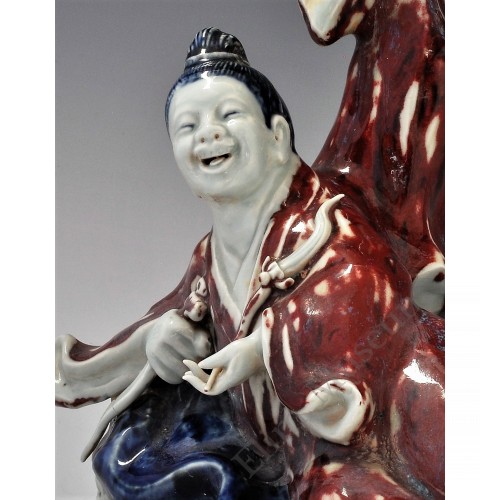
This sculpture seems to capture a moment from the celebrated legend of the Eight Immortals Crossing the Sea. Holding his treasured sword, Lü Dongbin reclines at an angle in cheerful intoxication, laughing heartily, as though he has just returned from a banquet hosted by the Queen Mother of the West and the wine has yet to wear off. His relaxed posture and unrestrained smile vividly convey the openhearted, carefree temperament familiar from legend, while also recalling the benevolent folk hero, ever ready to help others and treat them with kindness.
He Xiangu stands behind him, her sacred attribute now a lotus blossom. In Chinese, the word for lotus, he, is a homophone of her surname, making her identity easier to recognize. Beside Lü Dongbin's exuberant laughter, she appears composed and dignified. The artist has neither fashioned her as a maiden whose youthful beauty is meant to charm the viewer nor allowed her sacred status to obscure her human feelings. Instead, she resembles a mature woman of around forty: a gentle smile warms her face, and her softly closed lips suggest reserve and steadiness, bringing to mind a hardworking, generous mother with a peaceful heart.
One reclines in intoxication; the other stands. One laughs freely; the other gazes attentively. Their contrasting poses and expressions complement each other, lending the scene both joyful movement and a reassuring sense of stability. Lü Dongbin's ease and He Xiangu's warmth create a harmony in which movement and stillness coexist.
What makes this work moving is the artist's refusal to let their religious identities erase their distinctive personalities. Beneath the names of immortals, we still sense people of flesh and blood: they laugh and take pleasure in life, yet retain an innocent sincerity; they seek freedom and spontaneity while remaining kind to others. Through these two immortals, we can also discern the artist's love of everyday life and appreciation of joy, tolerance, and human goodness.