
Item No.: 1728
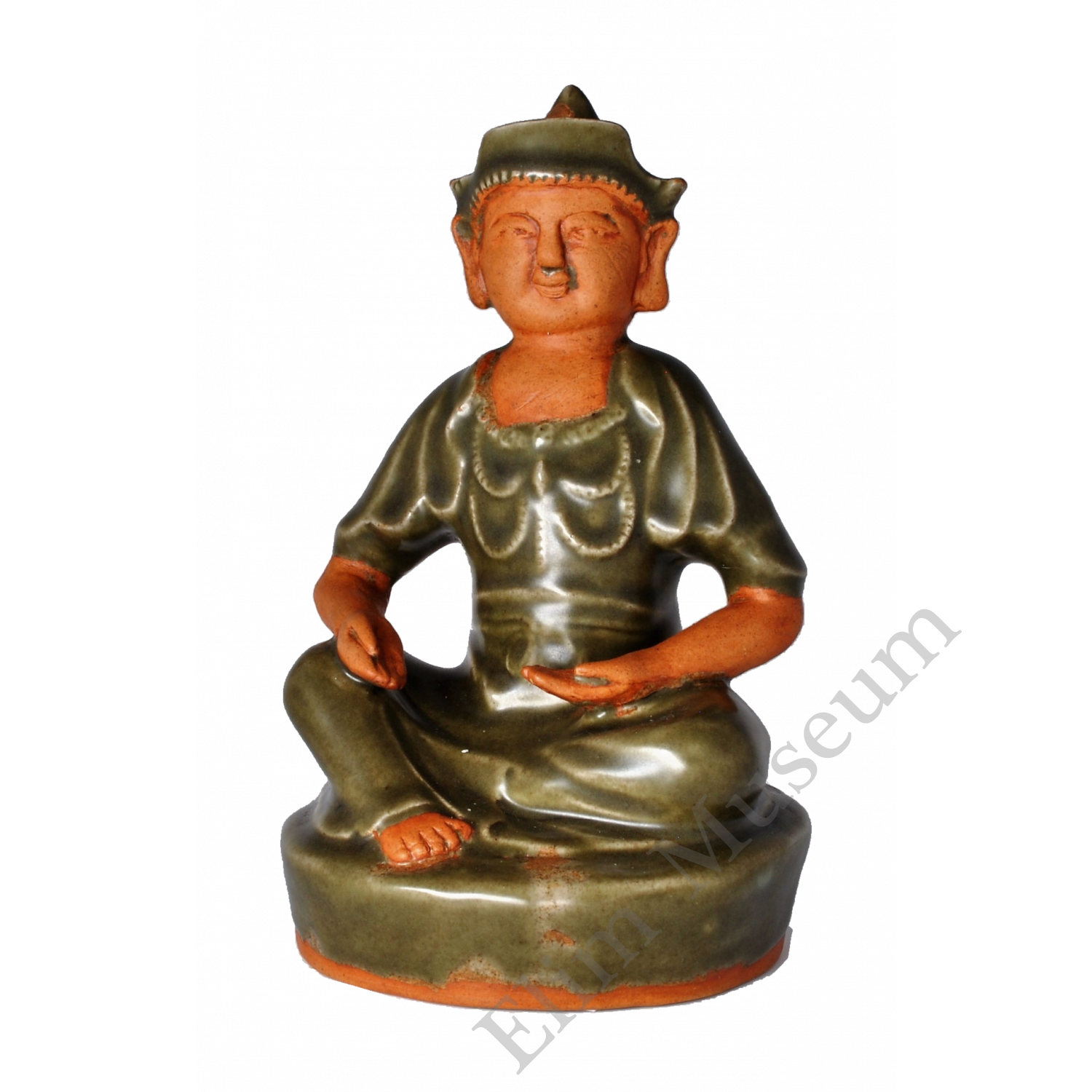
Name: A Longquan ware seated Mongolian monk
Period: Yuan dynasty
Height: 19.8 cm
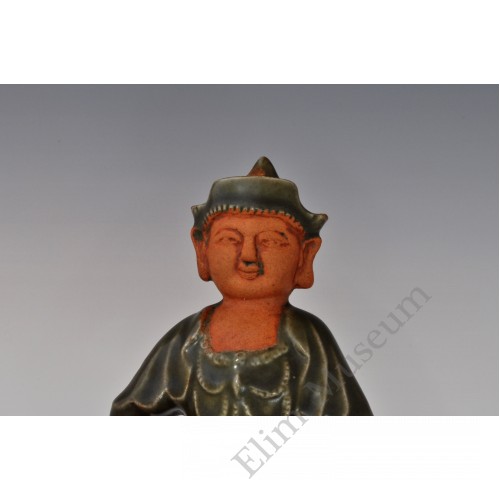
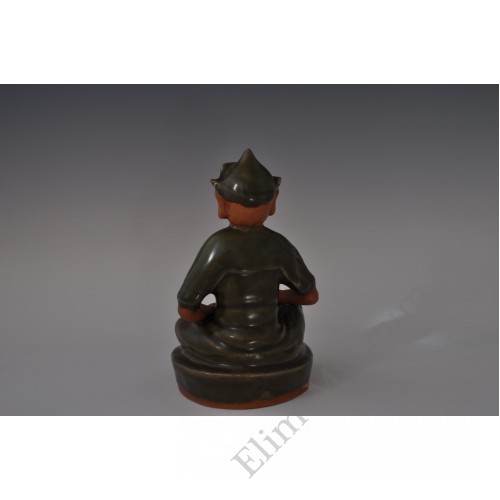
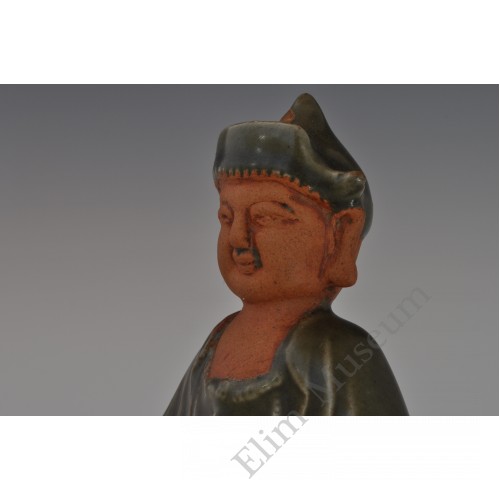
This sculpture appears to depict a Mongolian monk wearing a pointed felt hat with a folded brim. The contrast between the celadon glaze and the exposed ceramic body reflects a distinctive decorative style associated with Longquan ware of the Yuan dynasty. The warm, lustrous glaze set against the plain texture of the unglazed clay gives the figure a greater sense of depth. The man has a broad, full face, slightly opened eyes, and a faint, contemplative smile. Calm and composed, he sits with his legs crossed in a half-lotus posture. His hands rest naturally, with the left palm facing upward and placed before his abdomen, conveying a sense of quiet introspection.
This seated figure may be viewed as an artistic embodiment of the transition from war to peace. It evokes the history of certain Mongolian tribes’ conversion to Tibetan Buddhism, particularly the spiritual transformation brought about by the further spread of Buddhism in the sixteenth century. A people once accustomed to the battlefield, using military force to conquer other lands and establish their power, could also turn inward and seek compassion and tranquility through faith.
The phrase “lay down the butcher’s knife and become a Buddha on the spot” may here be understood as a spiritual transformation—from reliance on military force to compassion for life, and from external conquest to inner cultivation. It also prompts us to ask: even for a people once inclined toward force and conquest, why would the ultimate search become one for inner peace and liberation? Perhaps this reflects a shared human spiritual journey: when external conquest fails to bring genuine peace, people begin to return inward, seeking a meaning of life that transcends power, war, and desire.