
Item No.: 1743
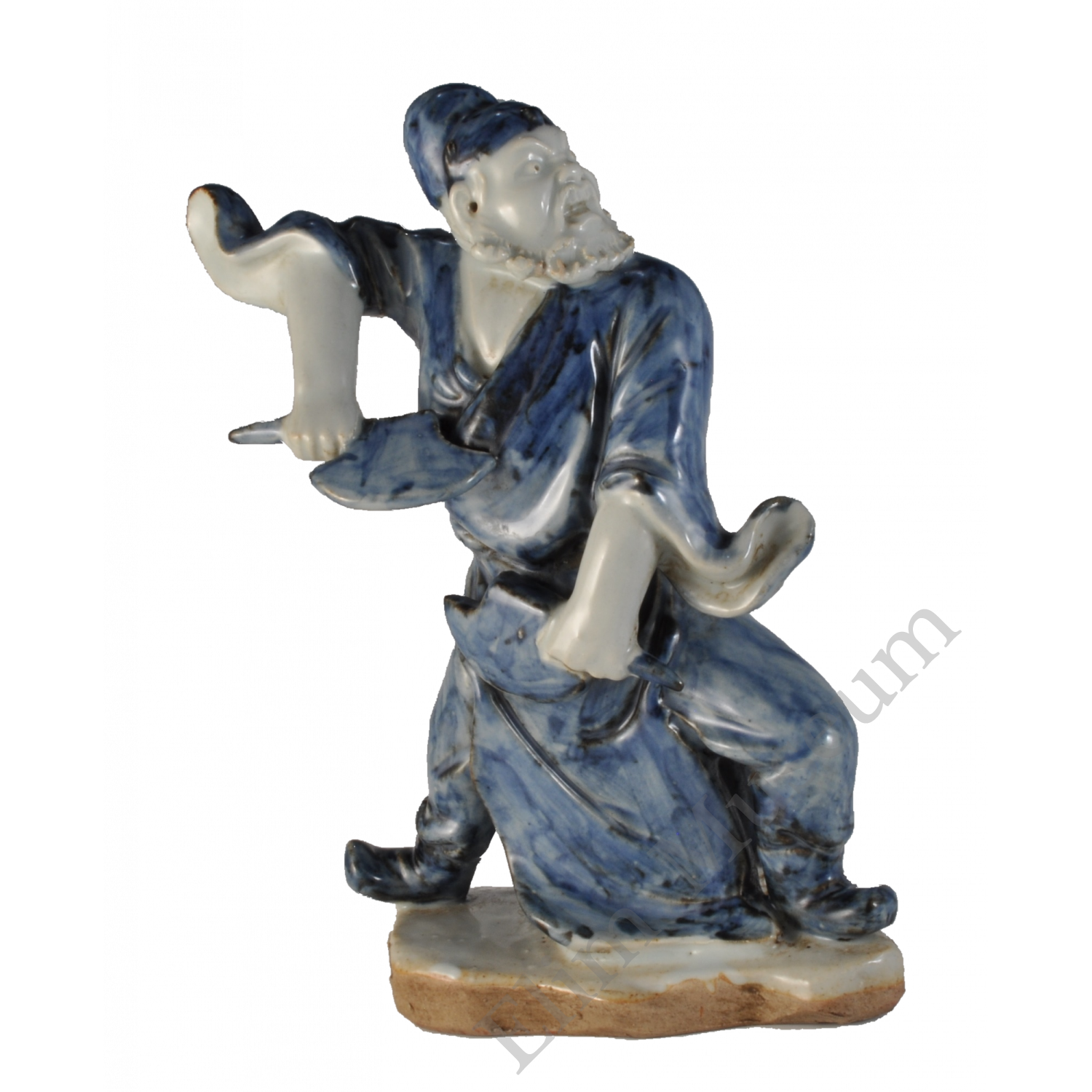
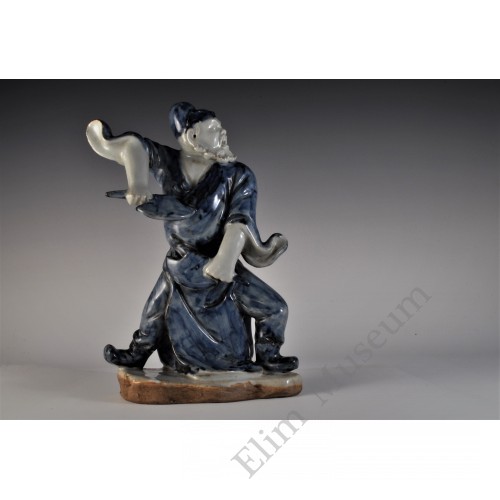
Name: A blue-and-white figure of Li Kui, the Black Whirlwind
Period: Yuan dynasty
Height: 23.5 cm
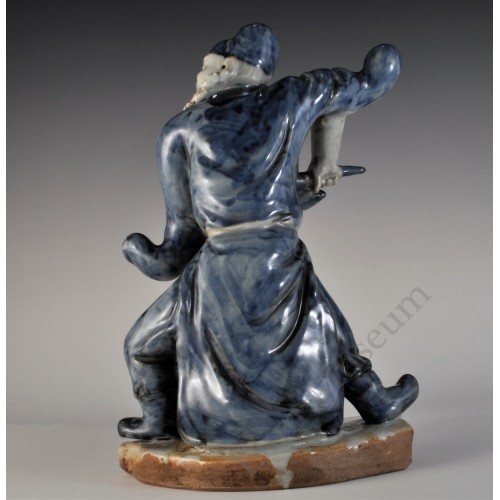
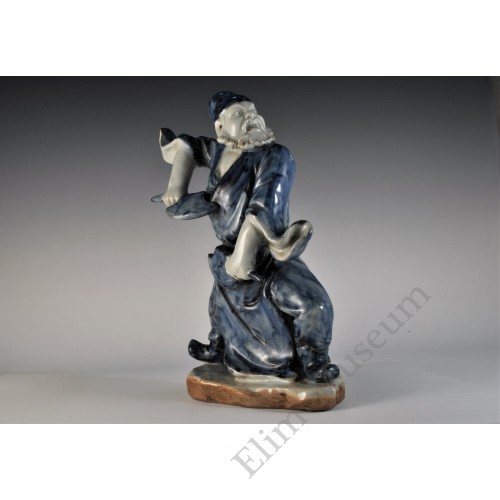
This Yuan dynasty blue-and-white porcelain sculpture, believed to depict Li Kui, presents an unusual aesthetic within the history of Chinese ceramic sculpture through its vivid rebellious spirit and powerful dramatic tension. At its center is a rough-hewn hero who dares to challenge authority, allowing the anger, sense of justice, and spirit of resistance found in popular narratives to take on a vivid and forceful three-dimensional form.
The flourishing of Yuan dynasty zaju drama, together with the social turmoil and shifting local powers of the late Yuan period, provides important context for understanding this work. The former offered artists abundant theatrical resources for shaping character imagery, while the latter made the work’s underlying sense of resistance more likely to resonate with viewers, generating a powerful emotional impact.
Kang Jinzhi’s zaju play Li Kui Bears the Thorny Branch offers a particularly suggestive interpretive clue. In the play, Li Kui mistakenly believes that Song Jiang has abducted a commoner’s daughter and angrily goes to confront him. He not only cuts down Song Jiang’s command banner but also causes a disturbance in the Hall of Loyalty and Righteousness. These actions fully reveal his fearlessness in the face of authority and his hatred of evil, as well as his impulsive and rash temperament. The artist may well have drawn on this highly conflictual dramatic episode to create the image before us: Li Kui gripping his axes, glaring angrily, and poised to strike.
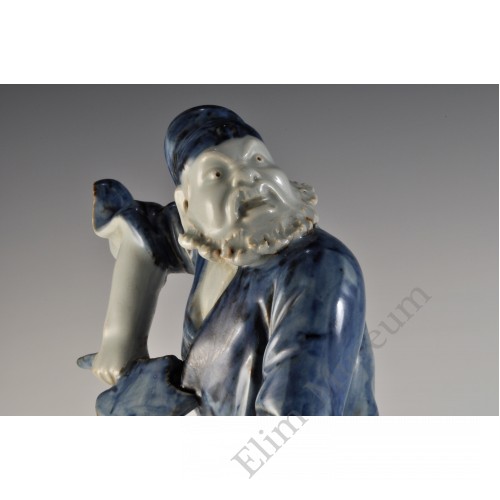
The figure stands with legs spread and knees bent, firmly grounded. His two axes are held at different heights, while his head and torso twist in counterpoint. With eyes wide open in anger, he appears frozen at the instant of a theatrical stage entrance. The turns of the body and the tension of the weapons echo one another, concentrating an imminent conflict within the limited space of the sculpture. This dynamic pose recalls the conventions of Chinese opera performance and makes the character’s ferocity, anger, and recklessness visible and palpable.
What is most striking about this work is the way it incorporates the intense emotions of a popular hero into the art of porcelain sculpture. Its vivid characterization, forceful bodily language, and direct representation of worldly conflict together give the work a powerful artistic impact. It also reveals how ancient ceramic artisans drew creative nourishment from popular stories, theatrical performance, and everyday culture, transforming a heroic figure circulating among the people into an artwork with enduring vitality.