Conflict and Harmony
Selected Chinese Porcelain Figure Sculptures and Paintings Across the Dynasties
Sculpted human figures are the heart of this exhibition. Musicians, mothers and children, warriors, and immortals reveal how modeled clay, gesture, dress, and glaze convey emotion and character. Selected figure paintings on ceramic vessels offer a complementary view of everyday life and literary stories, bringing three-dimensional form into dialogue with painted narrative.
I. Figure Sculpture
Explore music, family affection, childhood, heroes, and immortals through pose and expression. Select an image or title to open the collection record and additional photographs.
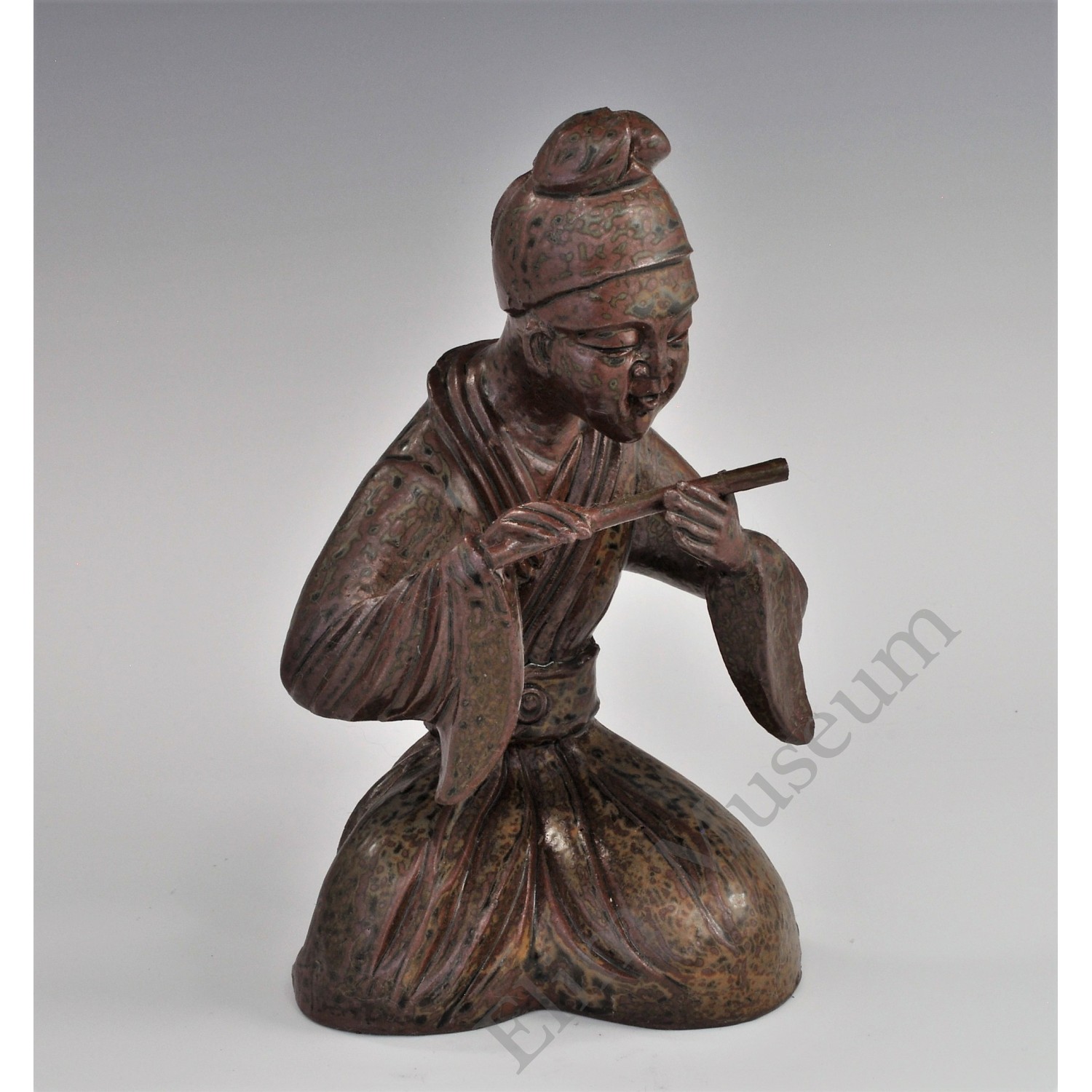
The kneeling youth raises a flute to his lips, his head slightly lowered in concentration. Bent arms and hanging sleeves hold a musical moment still, inviting us to imagine its sound. The figure offers a glimpse of how musicians, their dress and their gestures were represented in ceramic art.
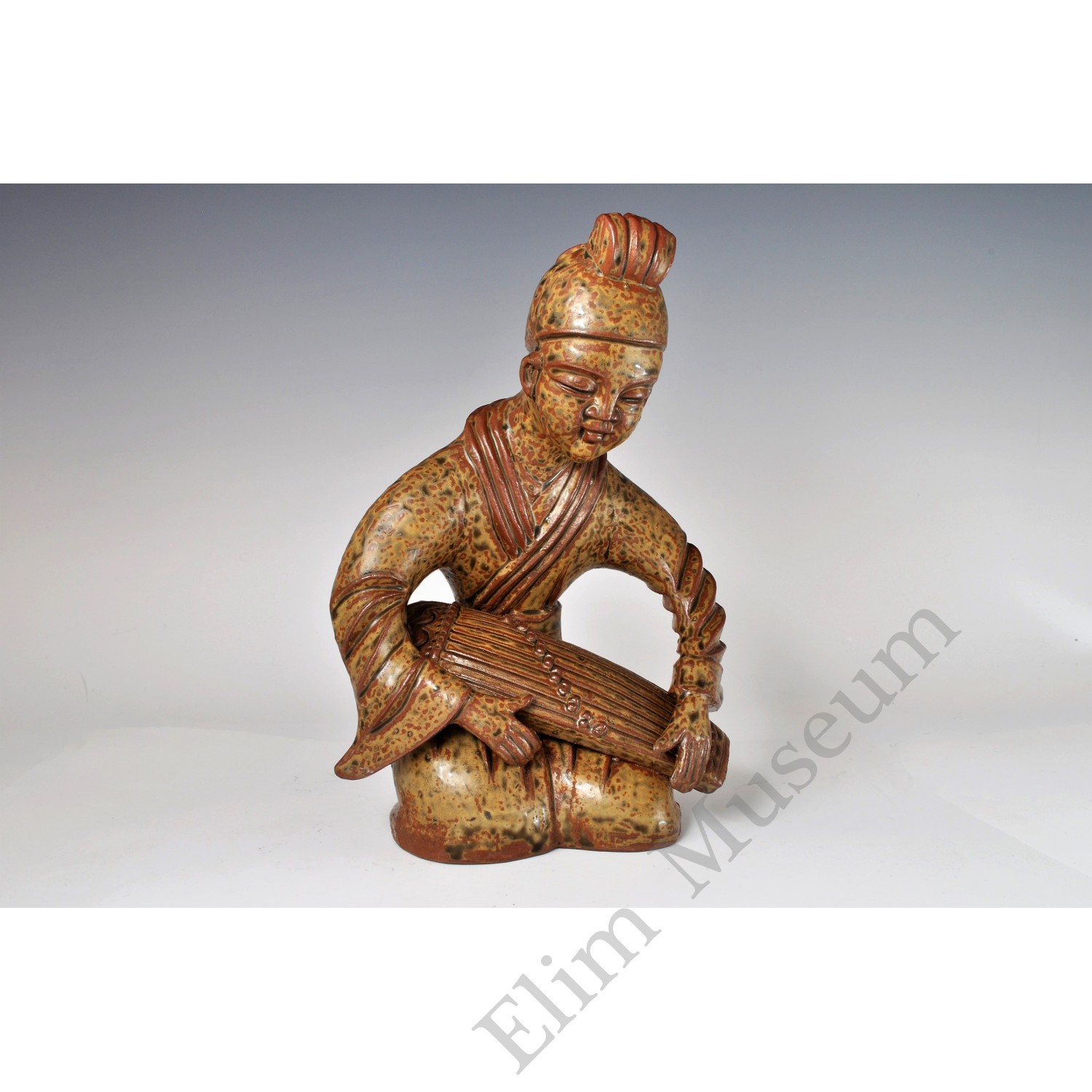
Seated cross-legged with a pipa, the youth leans toward the instrument, placing both hands over the instrument. His composed posture still suggests the rhythm and pleasure of performance. Seen alongside the flute player, he shows how ceramic sculpture translates musical activity into expressive bodily form.
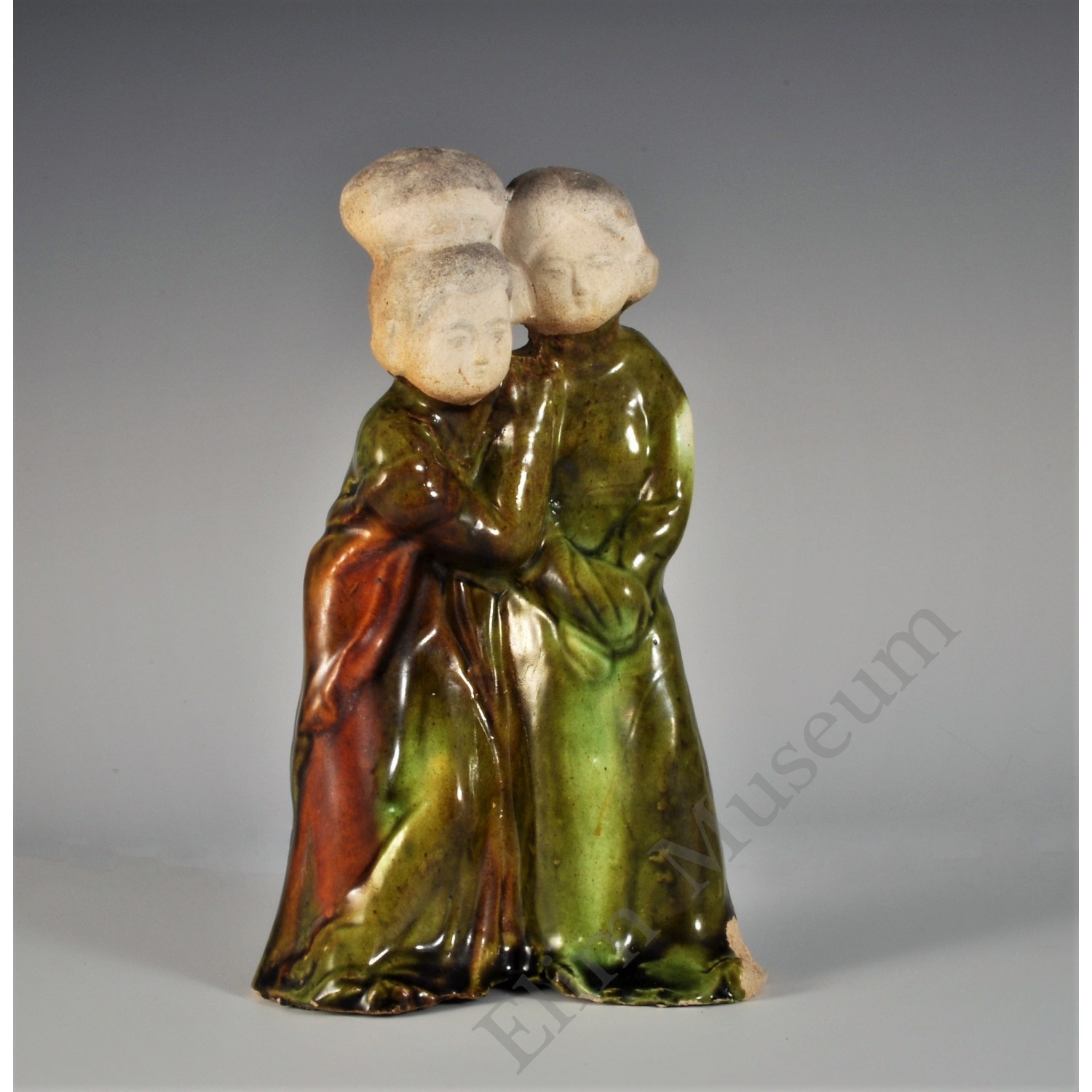
The two figures stand close, their heads inclined toward one another and their robes forming a compact silhouette. Affection is conveyed through proximity rather than exaggerated expression. Read through the museum’s identification as mother and daughter, the group gives family bonds a tangible form and demonstrates the expressive possibilities of sancai sculpture.
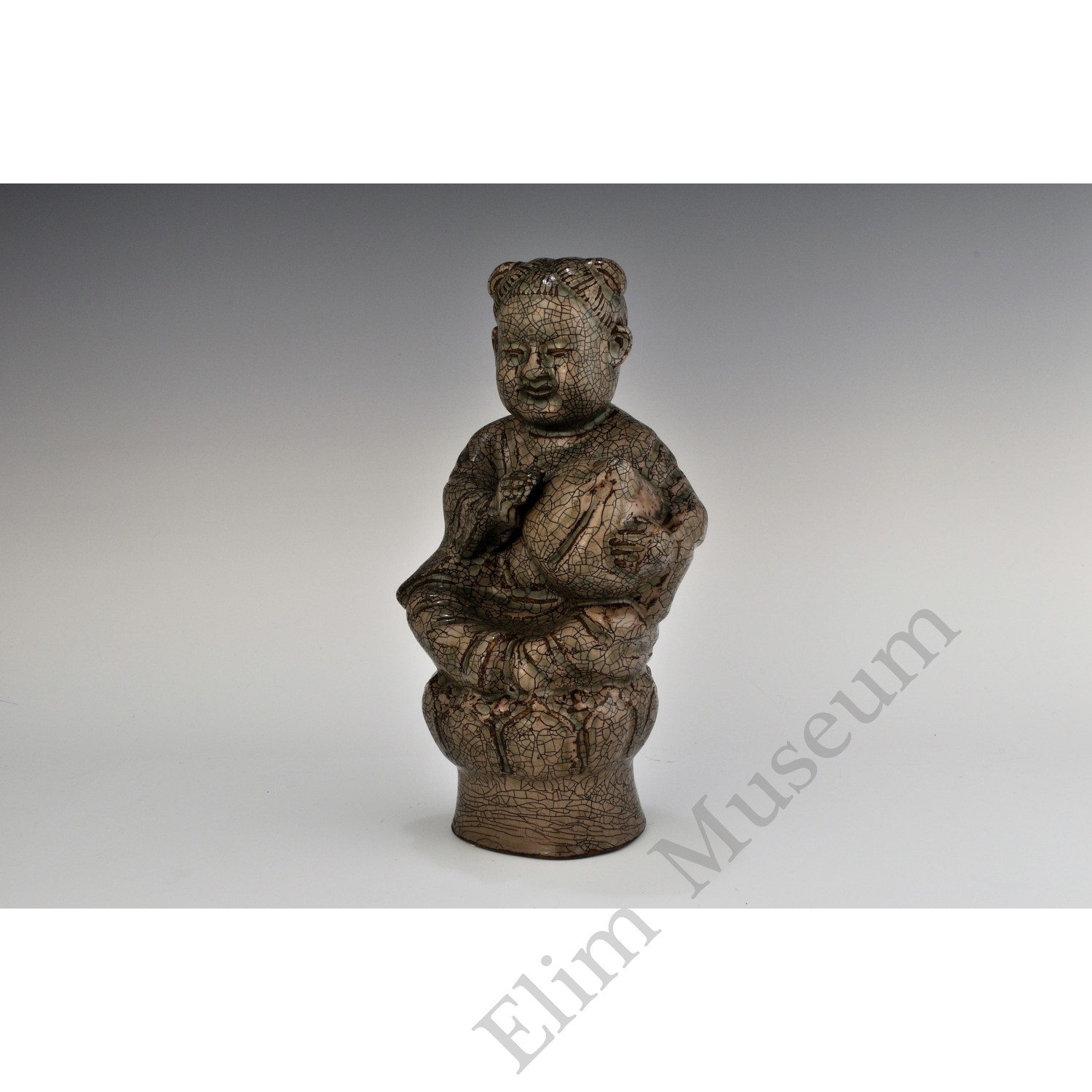
The seated child holds a peach before his body. His rounded face and compact posture suggest simplicity and composure. The offering gesture conveys respect and good wishes, while the peach evokes longevity. The sculpture brings childhood imagery and birthday blessings together in an approachable human form.
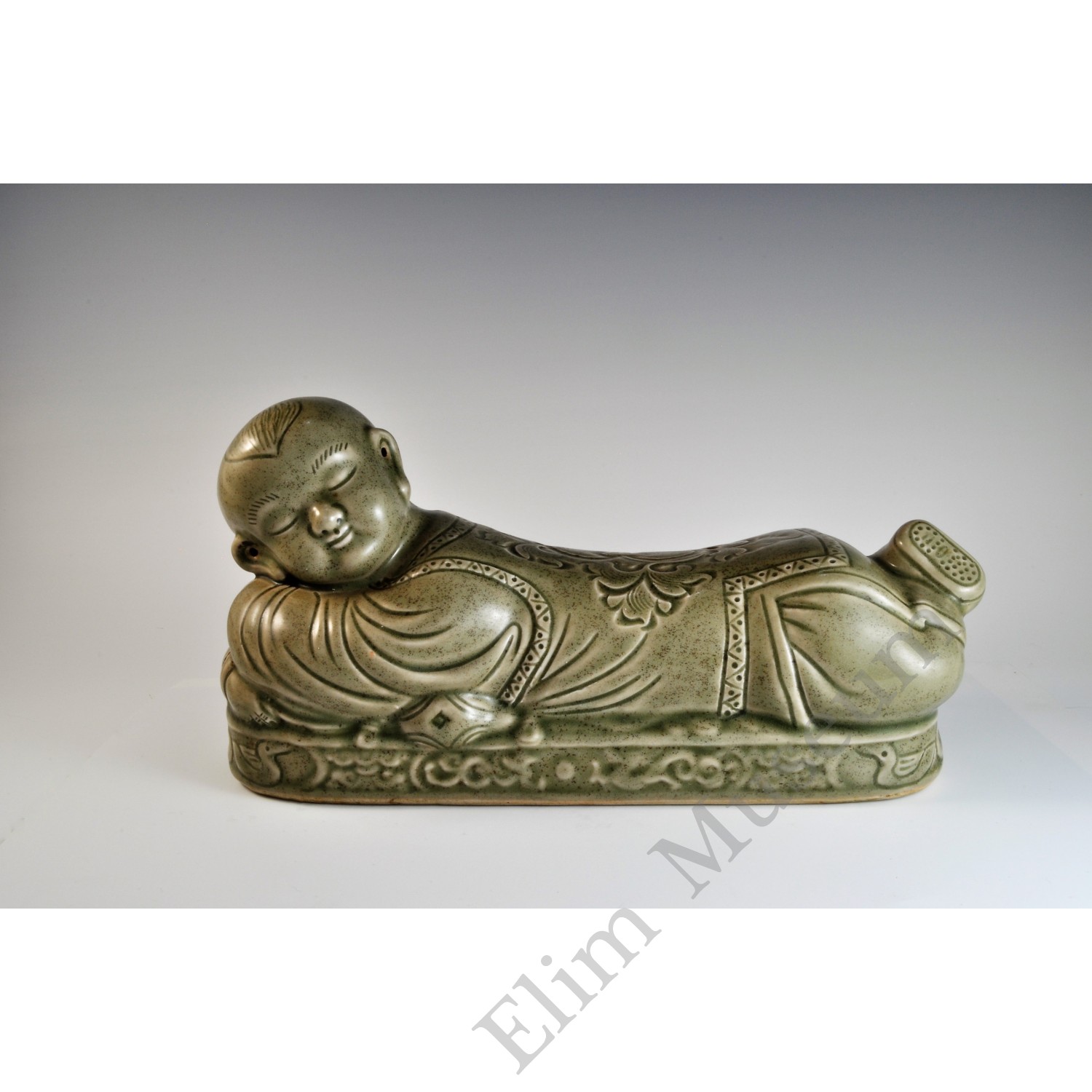
The child reclines with his head resting on his arms, his peaceful face and extended body forming the pillow. A familiar resting pose becomes a useful object, suggesting comfort and quiet repose. Its interest lies in the integration of human form, celadon decoration and the practical function of a ceramic pillow.
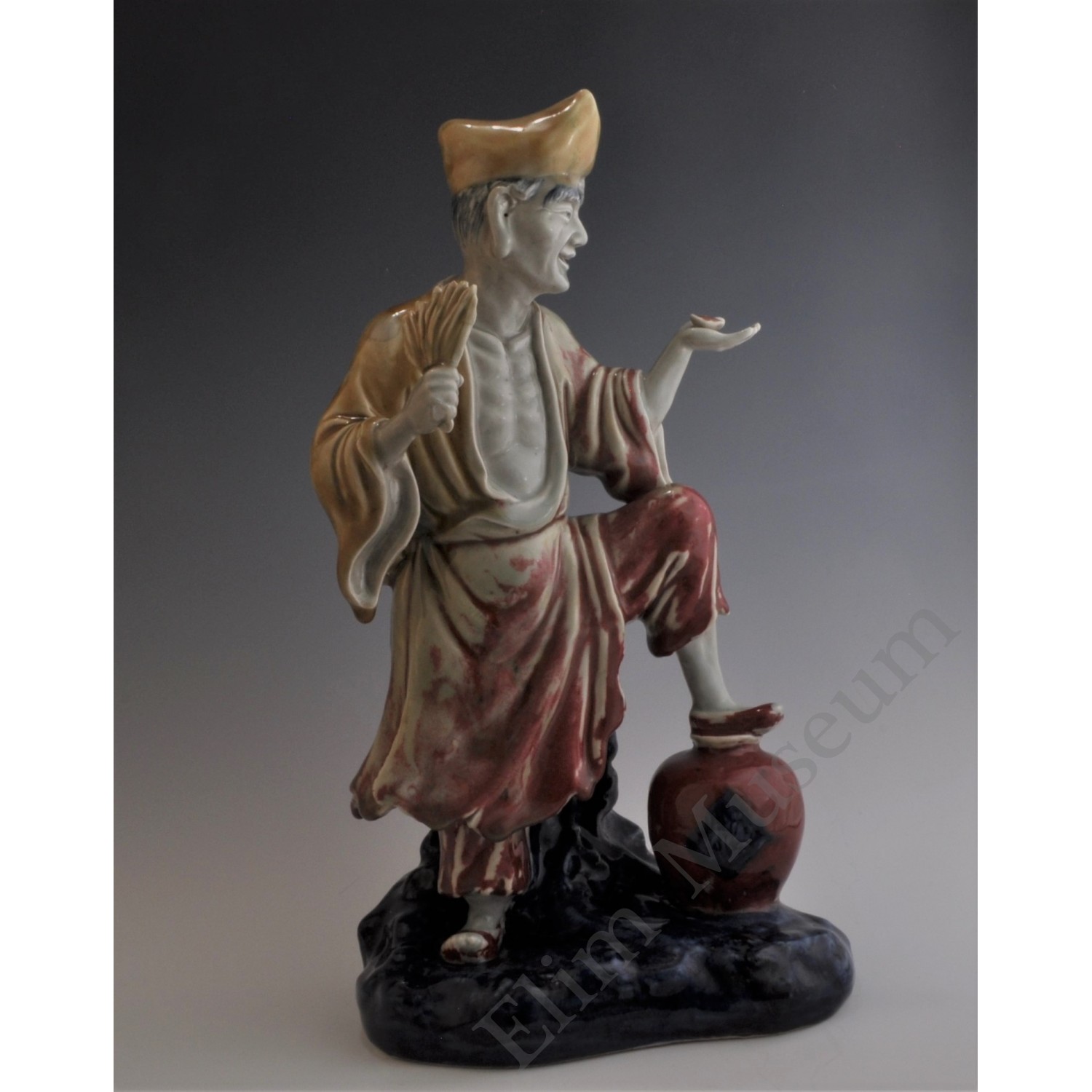
The monk turns his head, bends one knee and raises a hand, his open robe adding to an animated, unconventional appearance. The lively pose makes a religious figure feel approachable and recalls free-spirited monks in popular storytelling. It is especially engaging as a study of character; posture alone does not establish a specific identity.
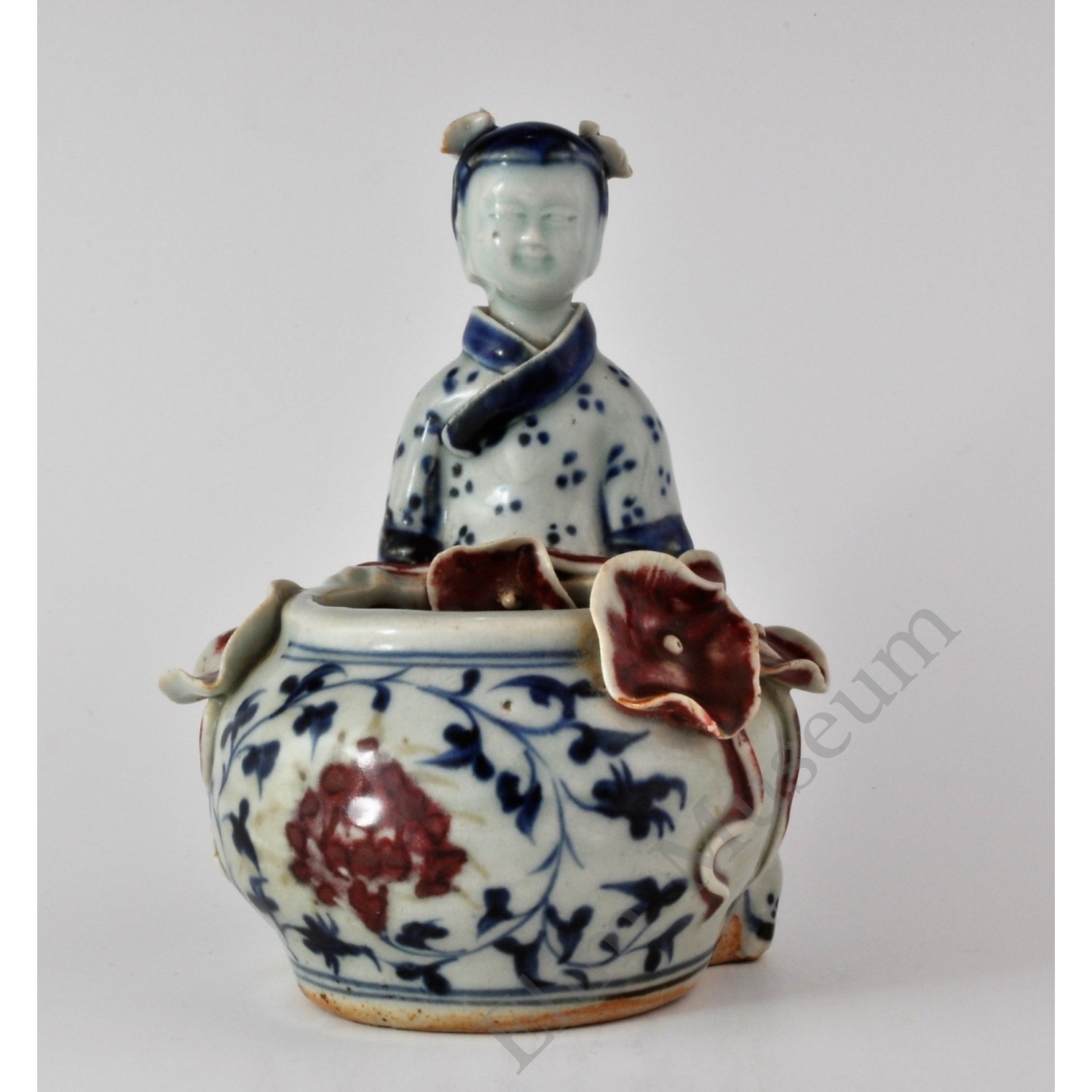
A smiling child rises behind the rounded vessel beside an outstretched lotus blossom. His friendly presence brings playfulness to a scholar’s desk, while the pairing of child and lotus invites an auspicious reading. The piece combines sculptural character, floral ornament and the function of a brush washer on an intimate scale.
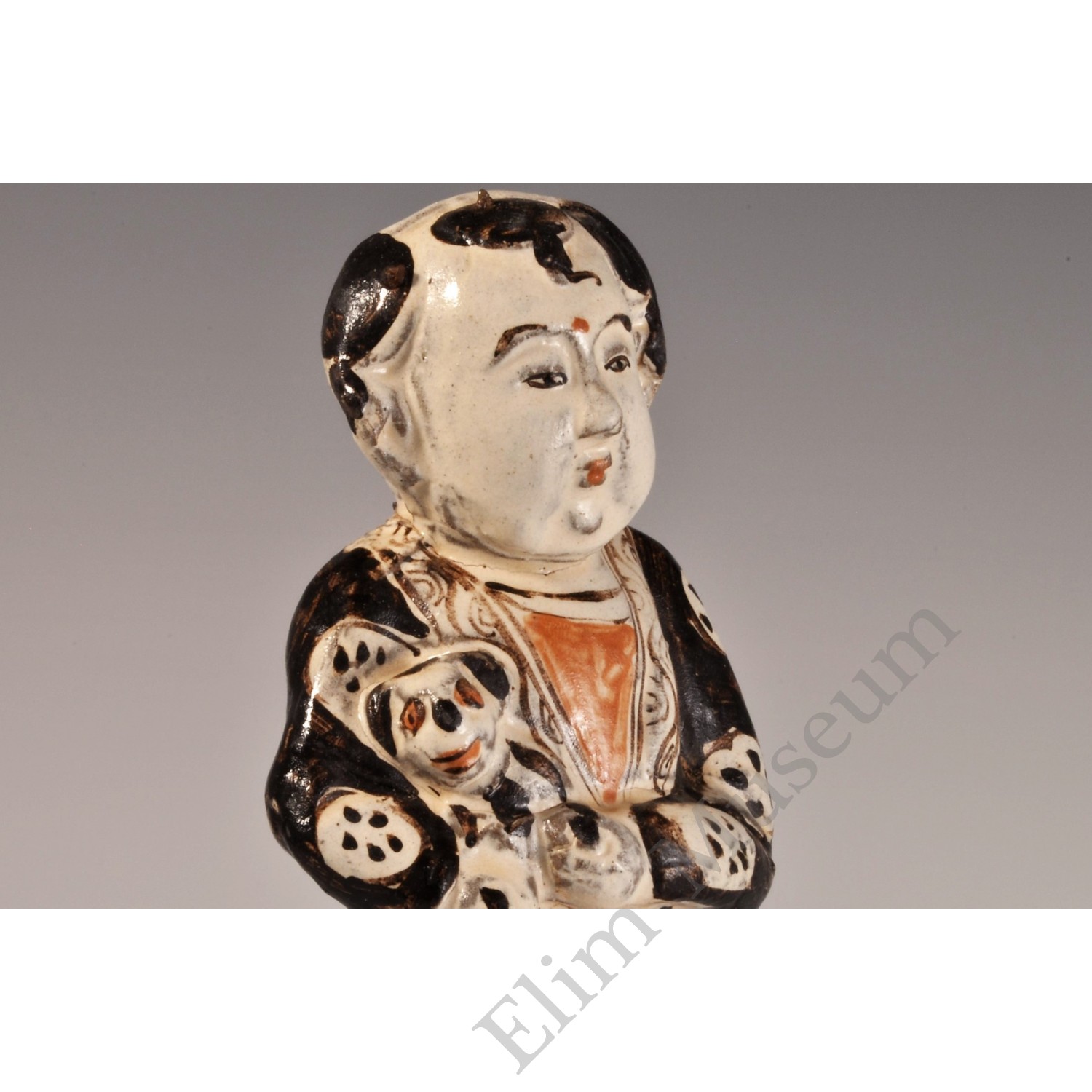
The child hugs a dog against his chest, with wide eyes and slightly parted lips suggesting surprise or delight. The enclosing arms make companionship the center of the composition. Red and black accents sharpen the face and clothing, giving the sculpture a vivid, everyday warmth and an appealing sense of childhood curiosity.
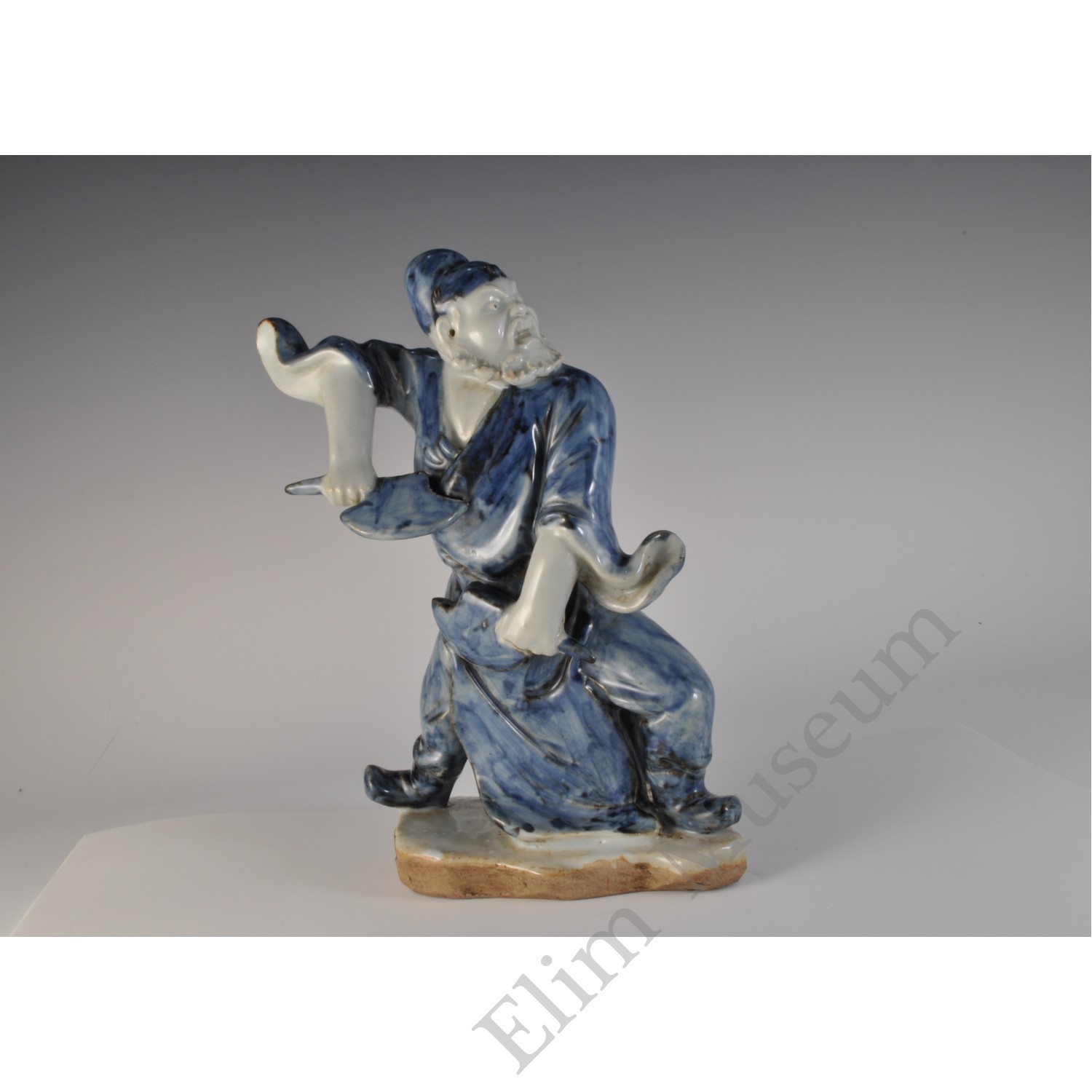
Bent knees, a turning torso, an extended arm and curling garments create a strong sense of imminent movement. Under the museum’s identification as Li Kui, the pose evokes the bold, impetuous hero of Water Margin. Its cultural interest lies in transforming a literary character into a three-dimensional presence rather than a historical portrait.
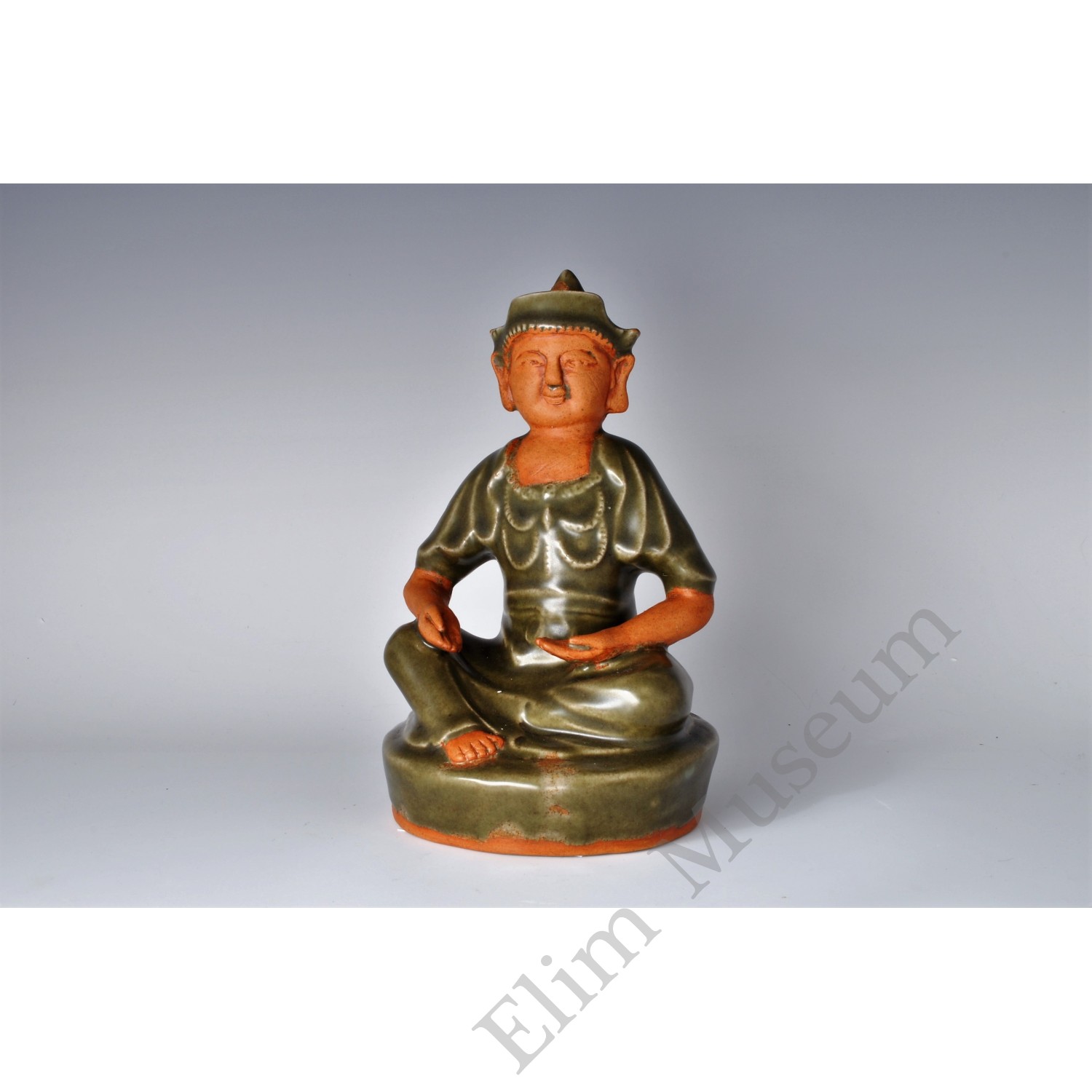
The warrior sits cross-legged, facing forward with his arms gathered before him. His steady posture suggests composure and self-possession rather than combat. Catalogued by the museum as a Mongol warrior, the figure invites discussion of martial identities, representations of dress and cultural encounters in ceramic art.
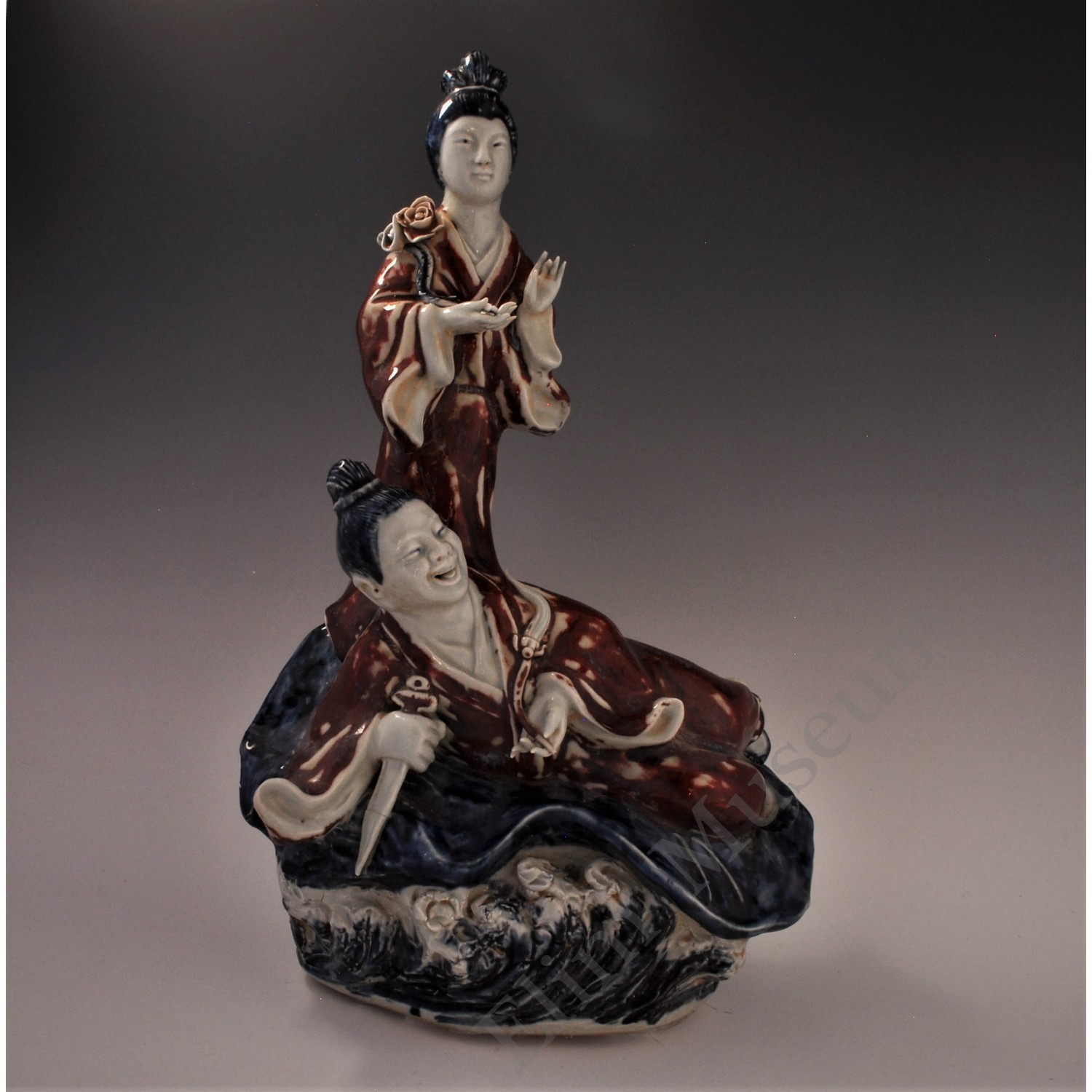
One figure reclines while the other stands behind, creating a dialogue of height, gesture and stillness. Their relaxed arrangement gives the immortal realm the intimacy of human companionship. Identified in the museum catalogue as Lü Dongbin and He Xiangu, the group connects Daoist ideals with everyday sociability through a carefully balanced composition.

The child has a rounded face, lowered eyelids and a quiet expression, while his seated form also serves as a wine ewer. Unlike lively scenes of children at play, the figure emphasizes calm and composure. It demonstrates the ingenuity of turning the human body into a vessel that combines sculptural appeal with practical use.
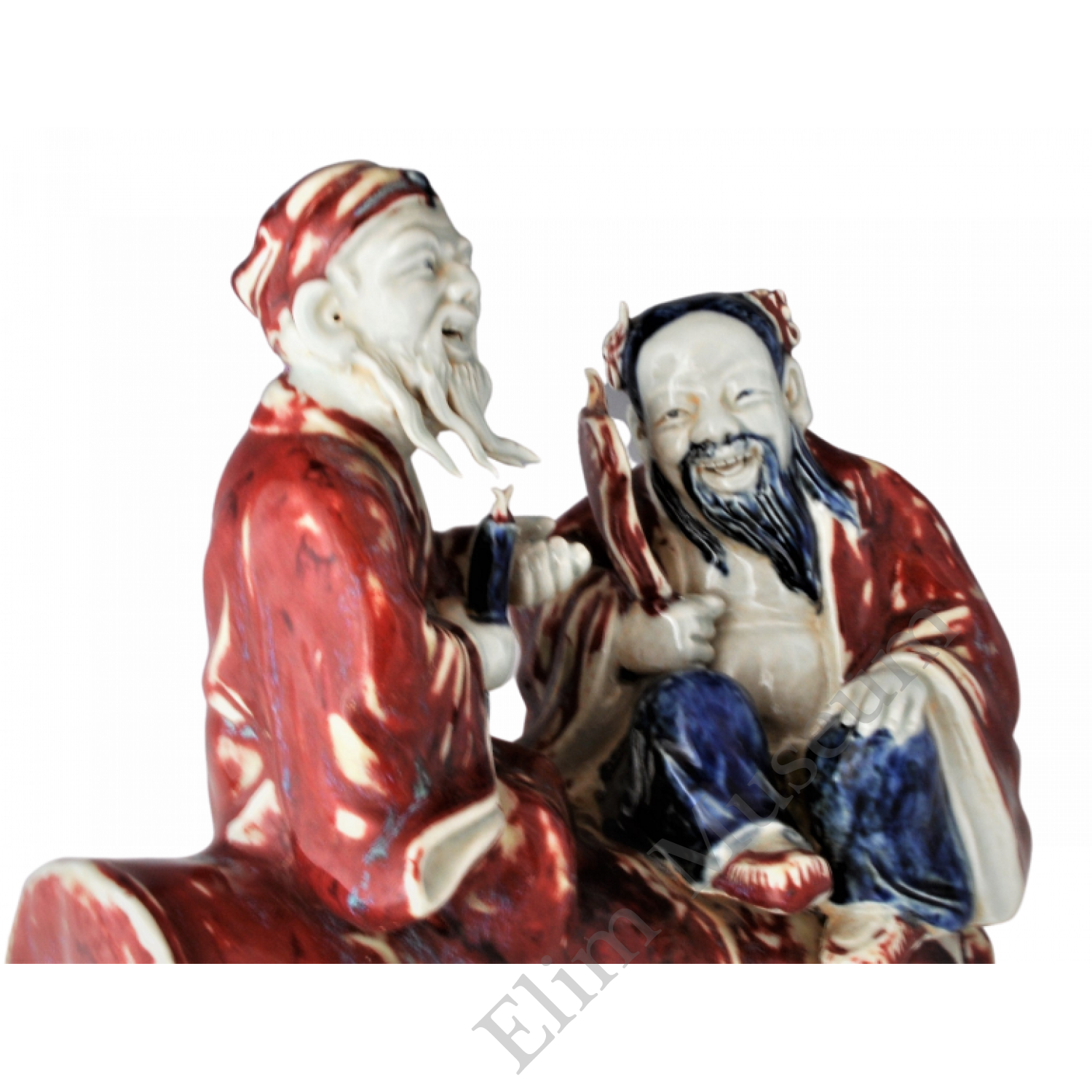
The two immortals gather in lively company: one lifts his face with his mouth open, while the other smiles broadly. Their gestures suggest conversation and shared amusement. Identified as Zhang Guolao and Zhongli Quan, they make the immortal world warmly human and show the sculptor’s interest in contrasting faces and personalities.
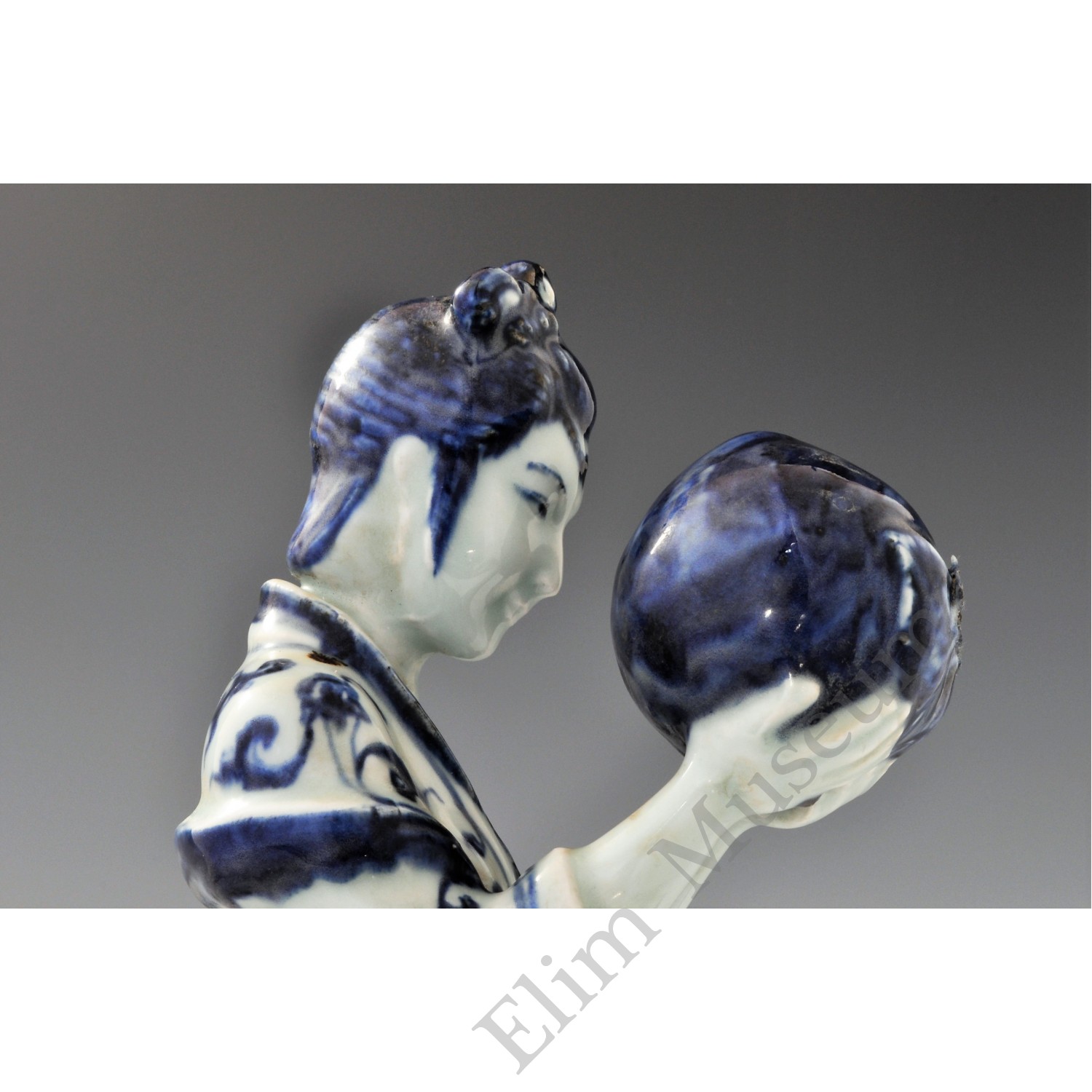
The young woman lowers her gaze toward the offering held in both hands, her extended fingers and measured posture conveying respect. Attention centers on the act of presentation and the sincerity of birthday wishes. The sculpture makes ritual courtesy visible while offering details of hairstyle, drapery and the representation of women.
-1500x1500-product_popup.jpeg)
Guanyin sits above lotus blossoms and curling waves, with lowered eyes, a gentle smile, the right hand raised and the left supporting a ritual object. The calm figure forms a still center within the elaborate base, suggesting compassion and reassurance. The sculpture demonstrates how Dehua white porcelain expresses devotion through modeling, a monochrome glaze and the play of light.
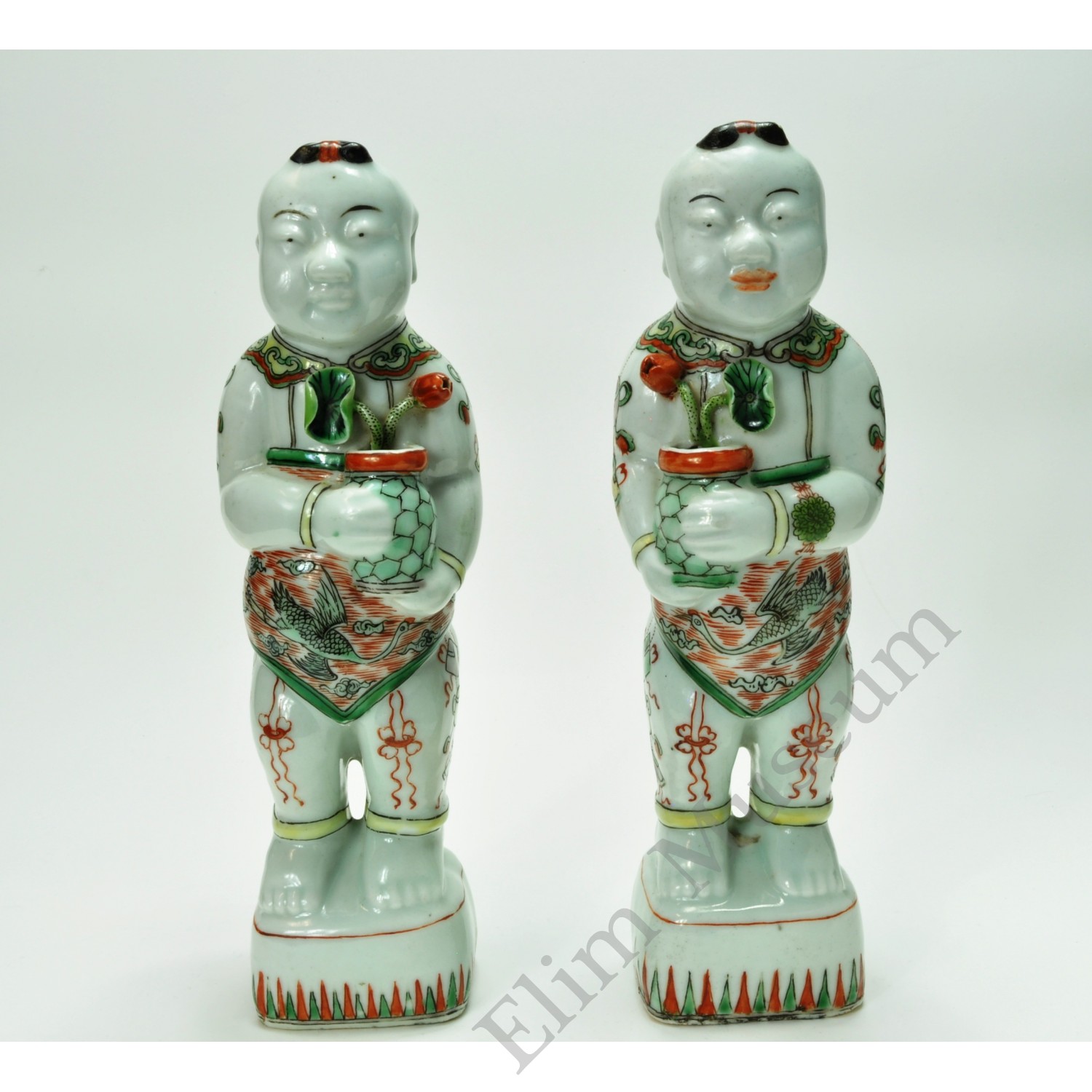
The two boys stand side by side holding lotus stems before them, their rounded faces and smiles creating a festive welcome. Similar poses are enlivened by differences in decoration. Children paired with lotus imagery commonly carry wishes for offspring and family prosperity, giving these decorative figures a role in expressing household hopes.
II. Figures in Painting
Narrative scenes and moments of daily life echo the emotions, gestures, and imagination of the sculptures.
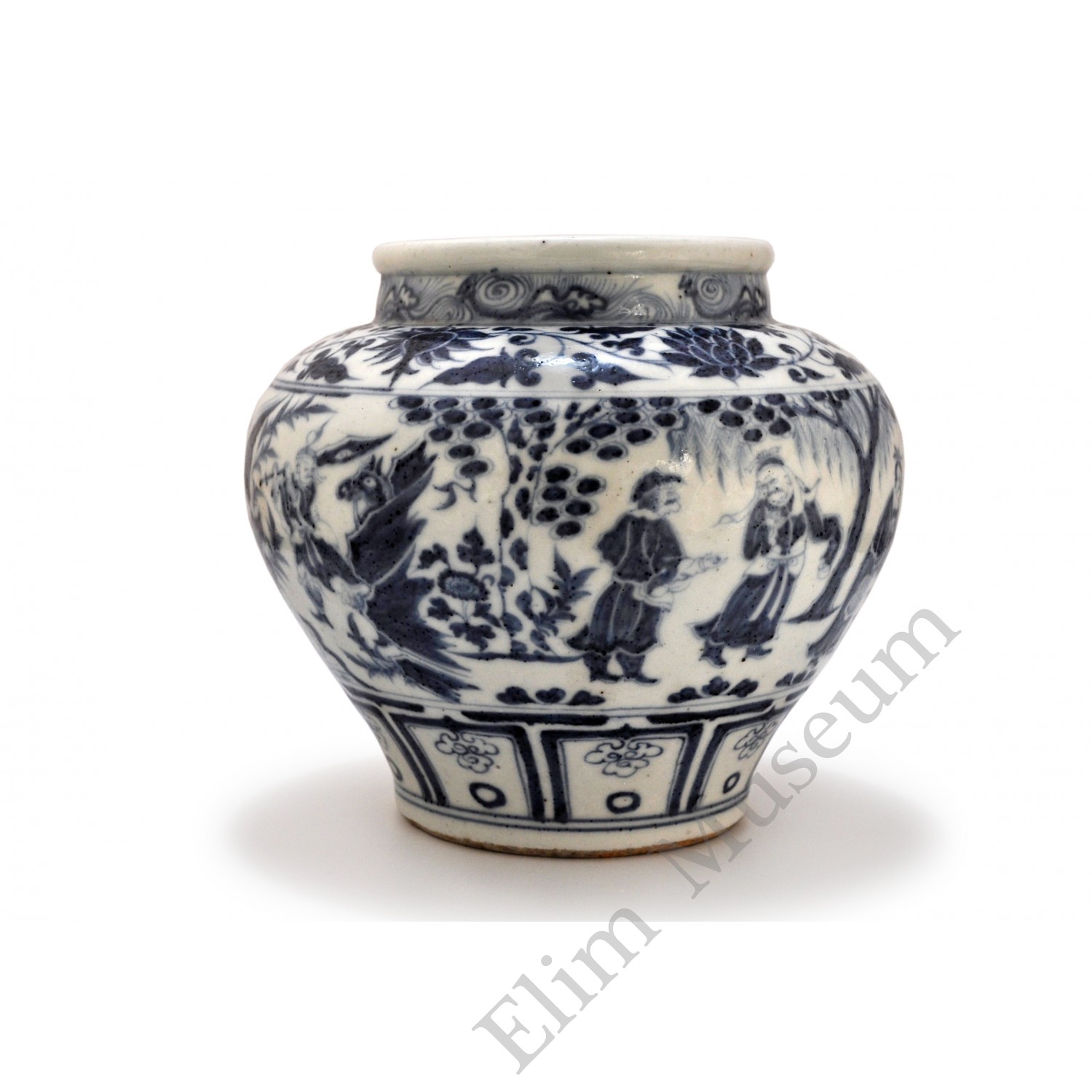
Figures face one another among trees and rocks, using joined hands and turned bodies to establish an exchange. Read through the catalogue title Three Visits to the Thatched Cottage, the scene evokes perseverance in seeking talent and the respect between patron and adviser. It shows how a few figures and gestures can carry a familiar Three Kingdoms narrative.
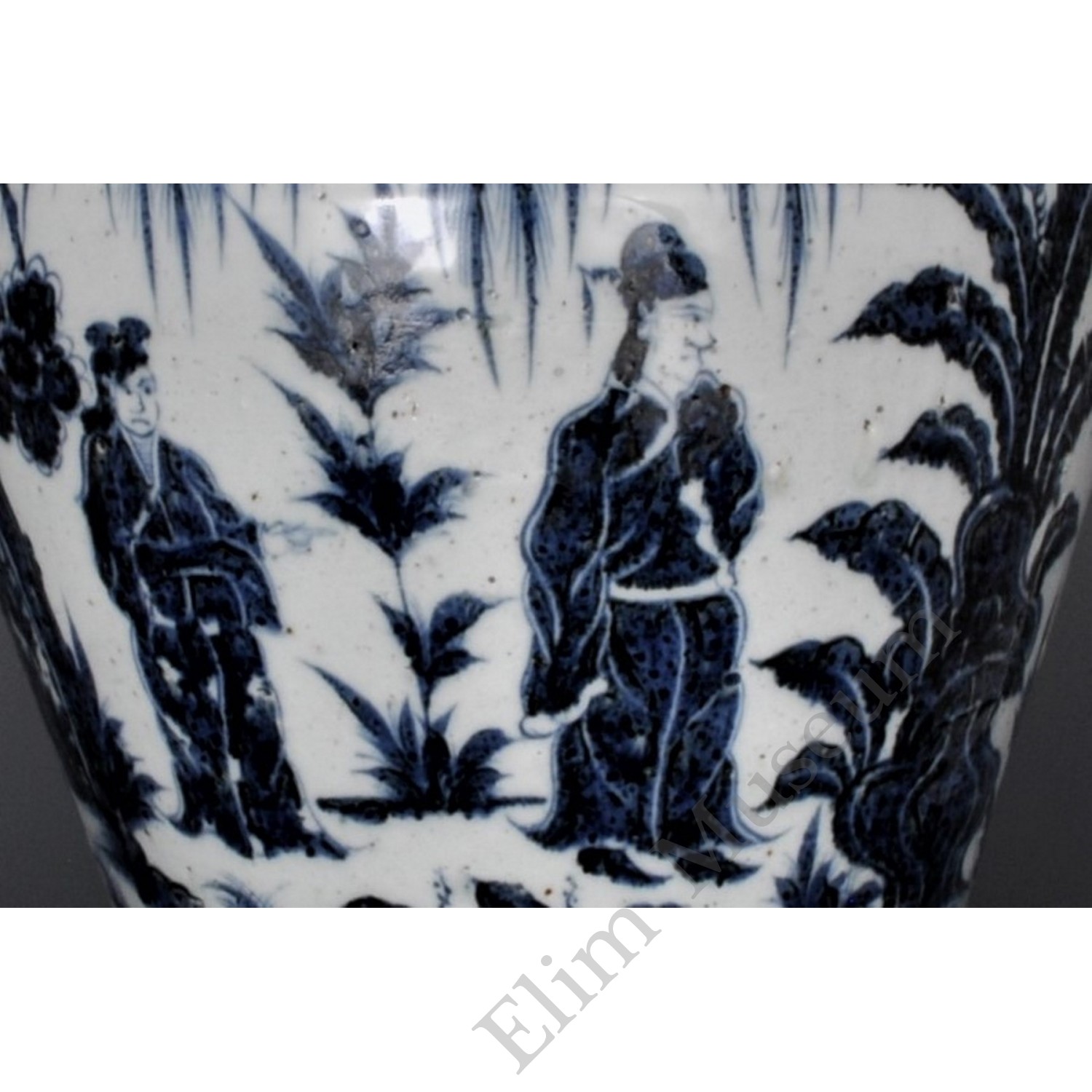
Figures stand apart in a garden, their turned bodies and glances suggesting a relationship across the intervening space. The restrained poses leave room to imagine anticipation or a meeting. Under the museum’s Jinxiangting title, the vase can be read as a literary romance, illustrating the exchange between storytelling and ceramic painting without fixing an uncertain episode.
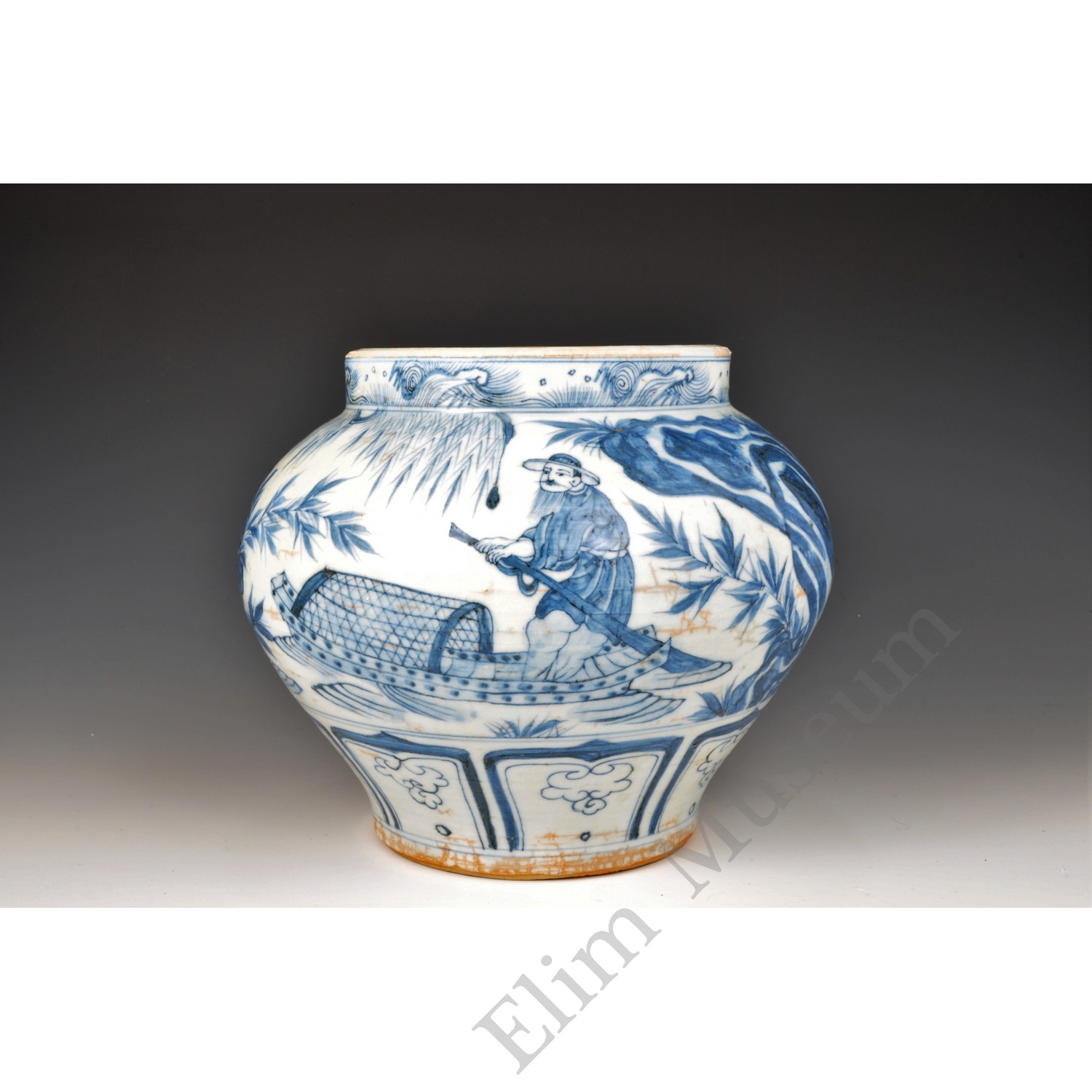
A hatted figure sits in a boat, reaching forward to handle its equipment amid water and vegetation. The measured action suggests a journey away from ordinary bustle. Through the catalogue title Peach Blossom Spring, the boat recalls the passage toward an ideal world in Tao Yuanming’s story and the translation of literary imagination into ceramic imagery.
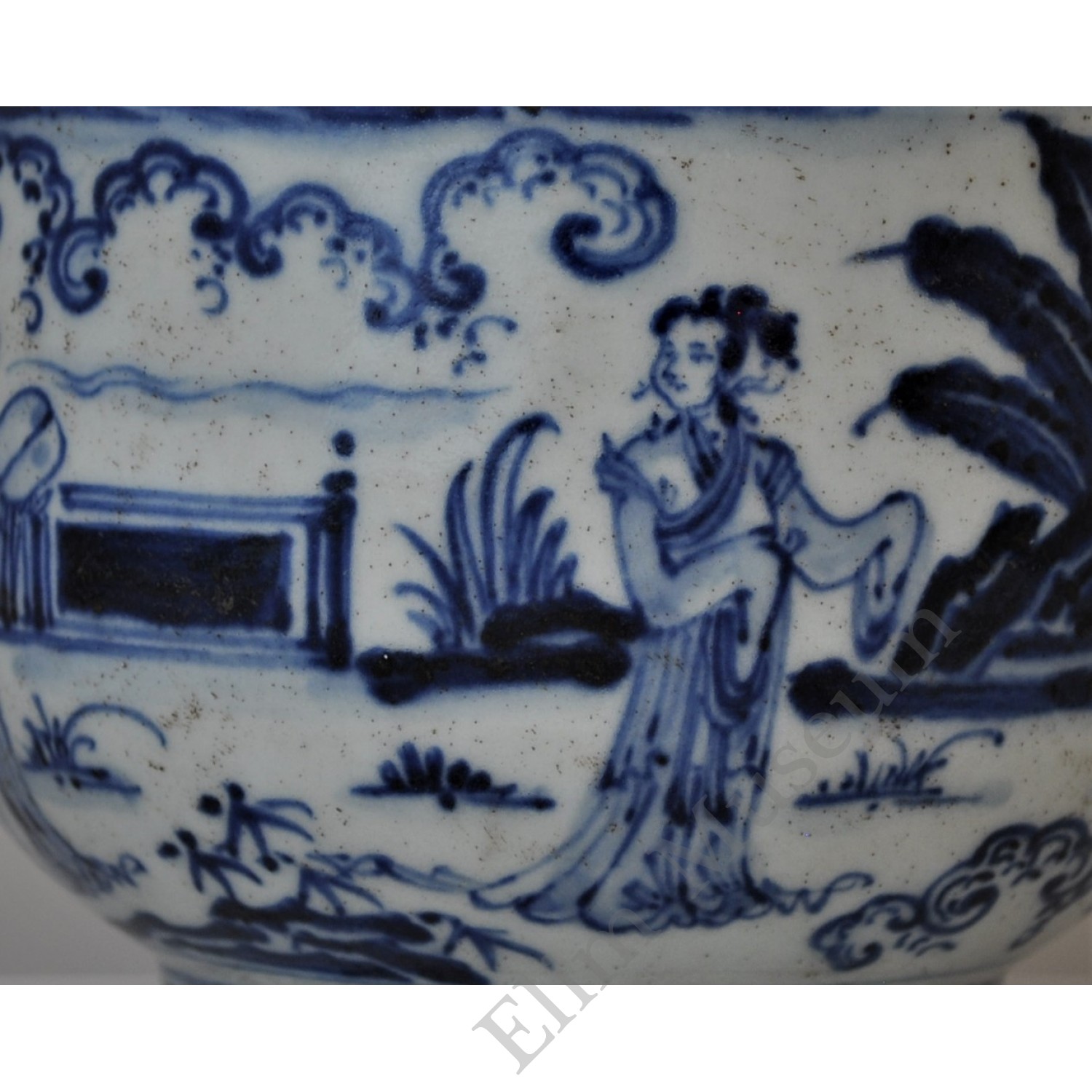
A lady turns in a garden, her arms and long sleeves forming gentle curves while fine facial lines keep her expression restrained. The turn introduces a suggestion of expectation or communication into a quiet setting. The scene shows how costume, garden scenery and gesture construct an idealized feminine image in the tradition of paintings of elegant women.

Some children sit apart while others are active, their positions and spacing creating a contrast between quiet and liveliness. The scene invites reflection on companionship, curiosity and solitude within childhood. It enriches the familiar children-at-play theme. The museum’s proposed connection to the Chenghua emperor’s childhood remains an interpretation, not an established identification.
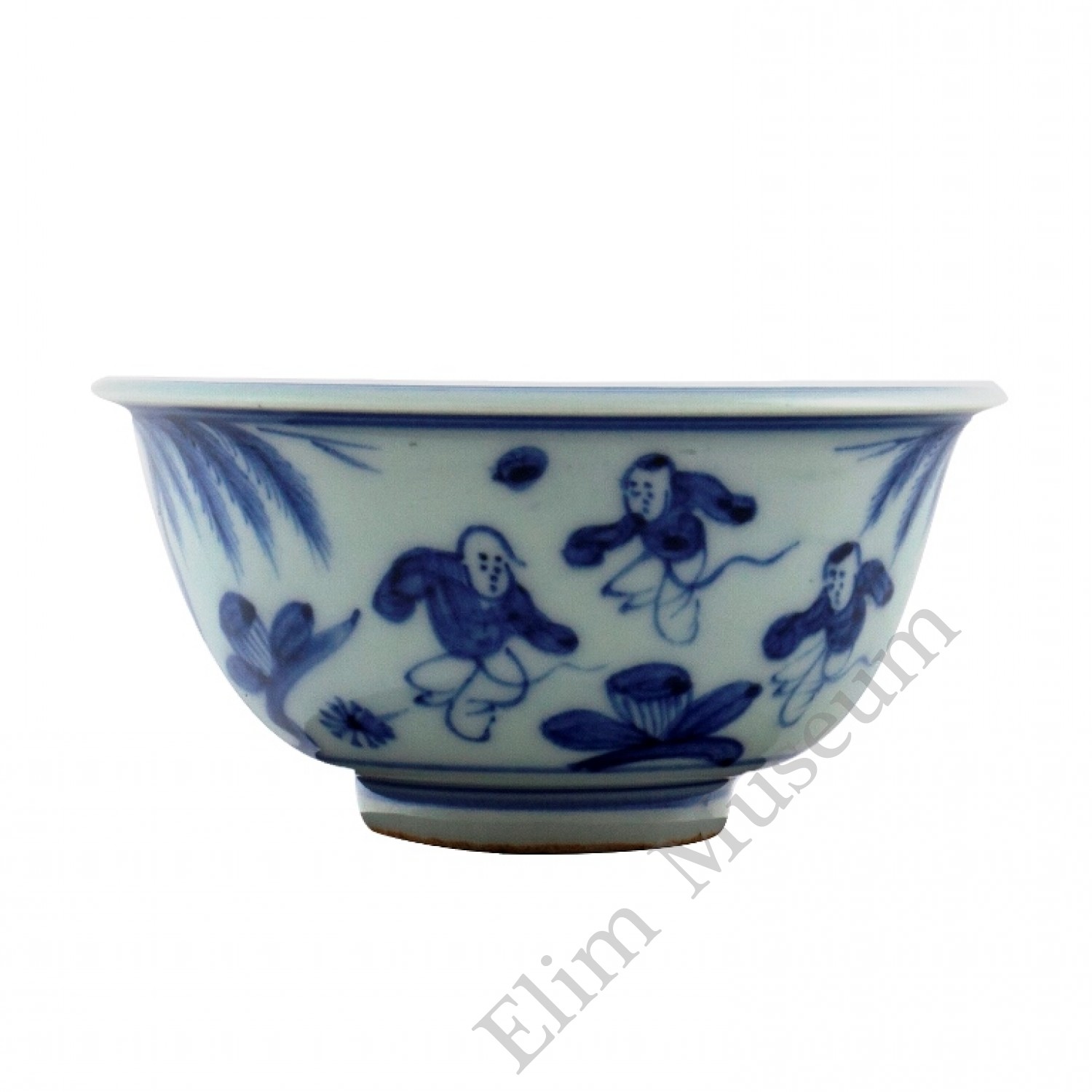
With outstretched arms and lifted legs, the children move around a ball across the cup’s curved surface. Simple facial lines and buoyant poses convey the excitement of play. The scene celebrates childhood energy and shared amusement while preserving cuju, a traditional ball game, as a subject of ceramic decoration.
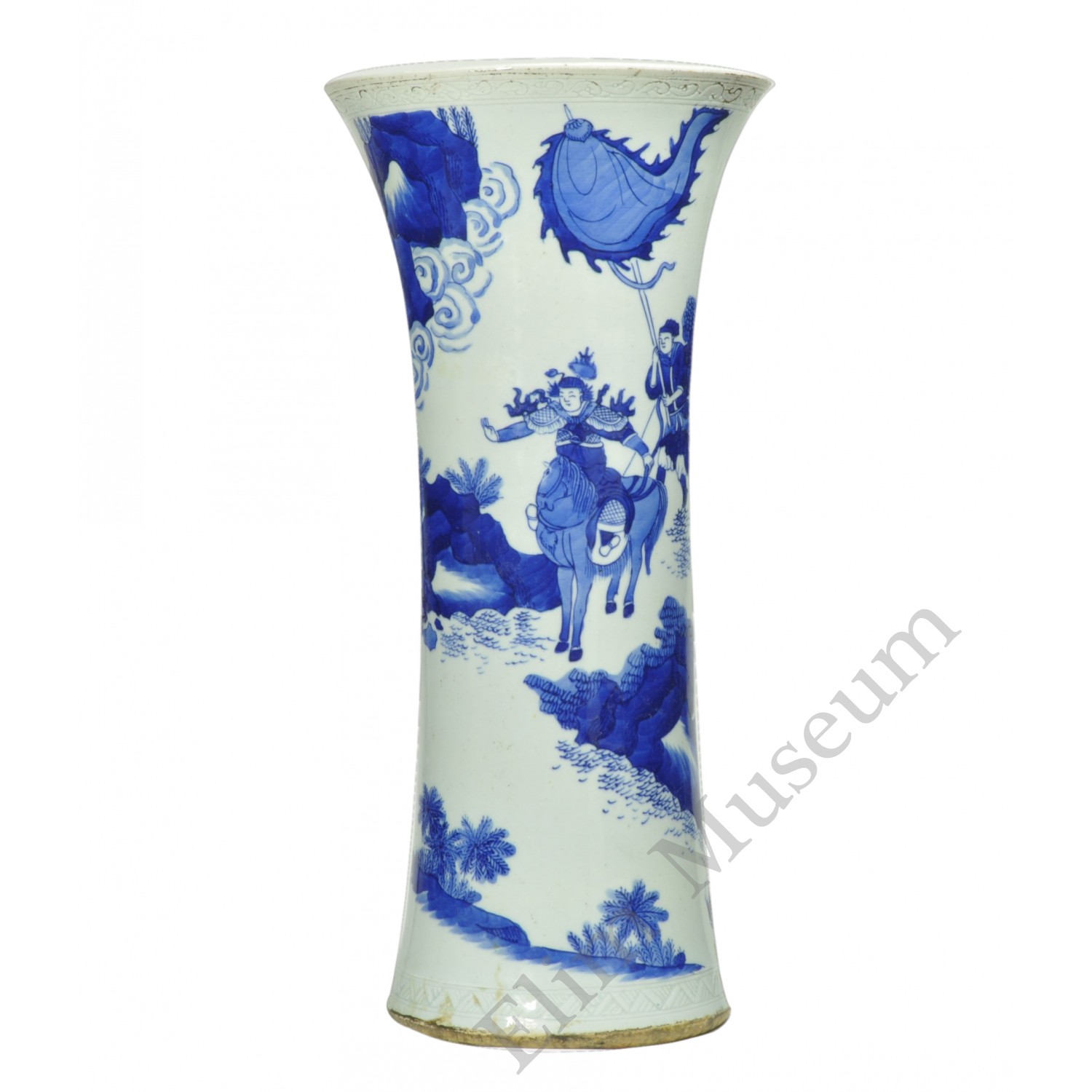
Figures are arranged among rocks, banners and changing scenery, with robes and gestures suggesting movement and response. Under the museum’s Three Kingdoms title, the decoration invites readings of heroic action, loyalty and strategy. It illustrates how an unfolding literary narrative can wrap around a vessel, without requiring an uncertain battle or character to be named.
-1500x1500-product_popup.jpg)
Seated and standing women are linked through activities such as music, listening, flower appreciation and tea preparation. Restrained expressions and flowing garments establish an atmosphere of ease. Rather than an unfiltered record of daily life, the decoration presents an ideal of cultivated leisure through varied figures, clothing and garden activities.
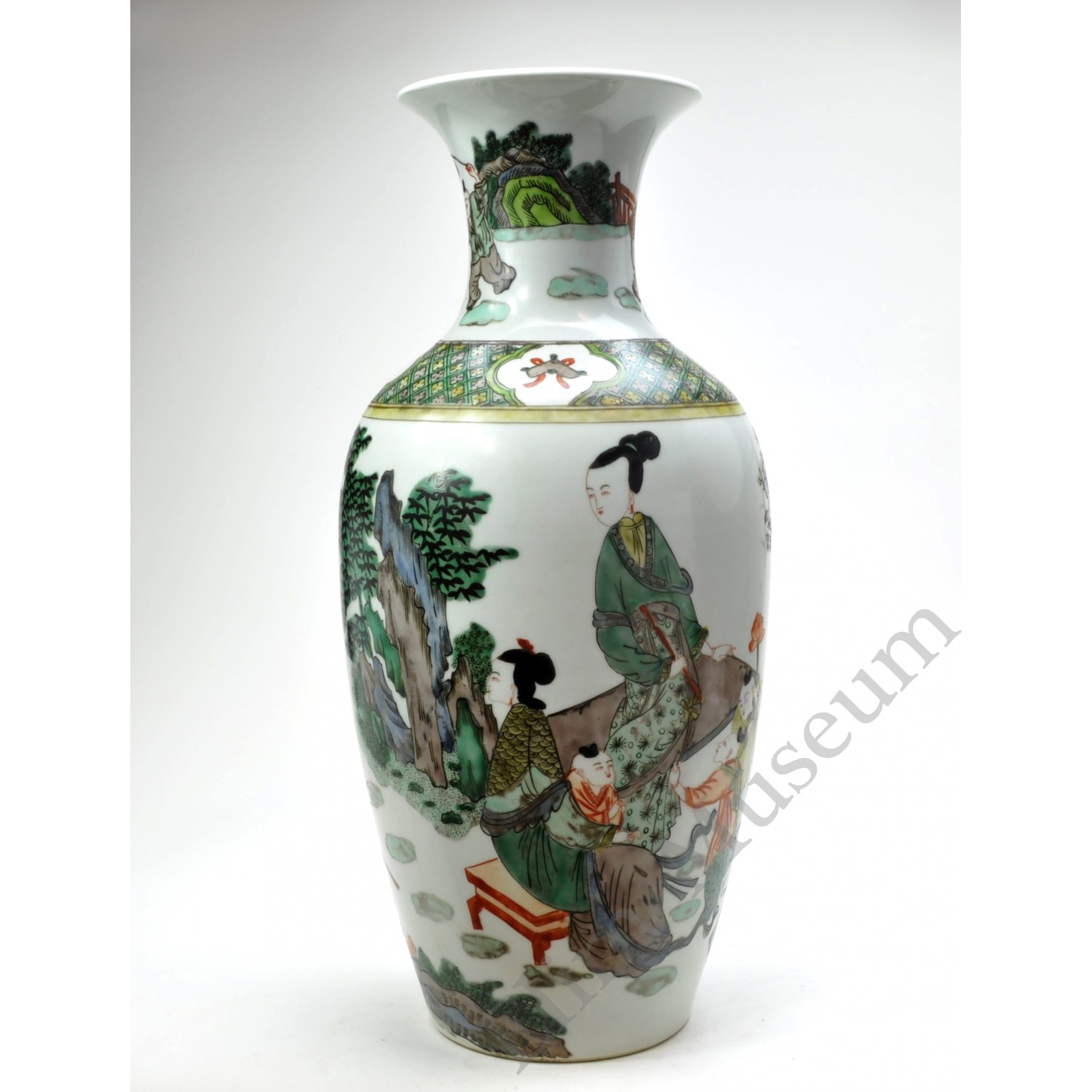
Seated and standing figures gather in a garden, with adults and children connected through glances, proximity and gestures. Under the museum’s touhu title, the scene relates to a throwing game with longstanding associations with etiquette and social gatherings. The visible view emphasizes relationships among participants rather than an unmistakable moment of throwing an arrow.
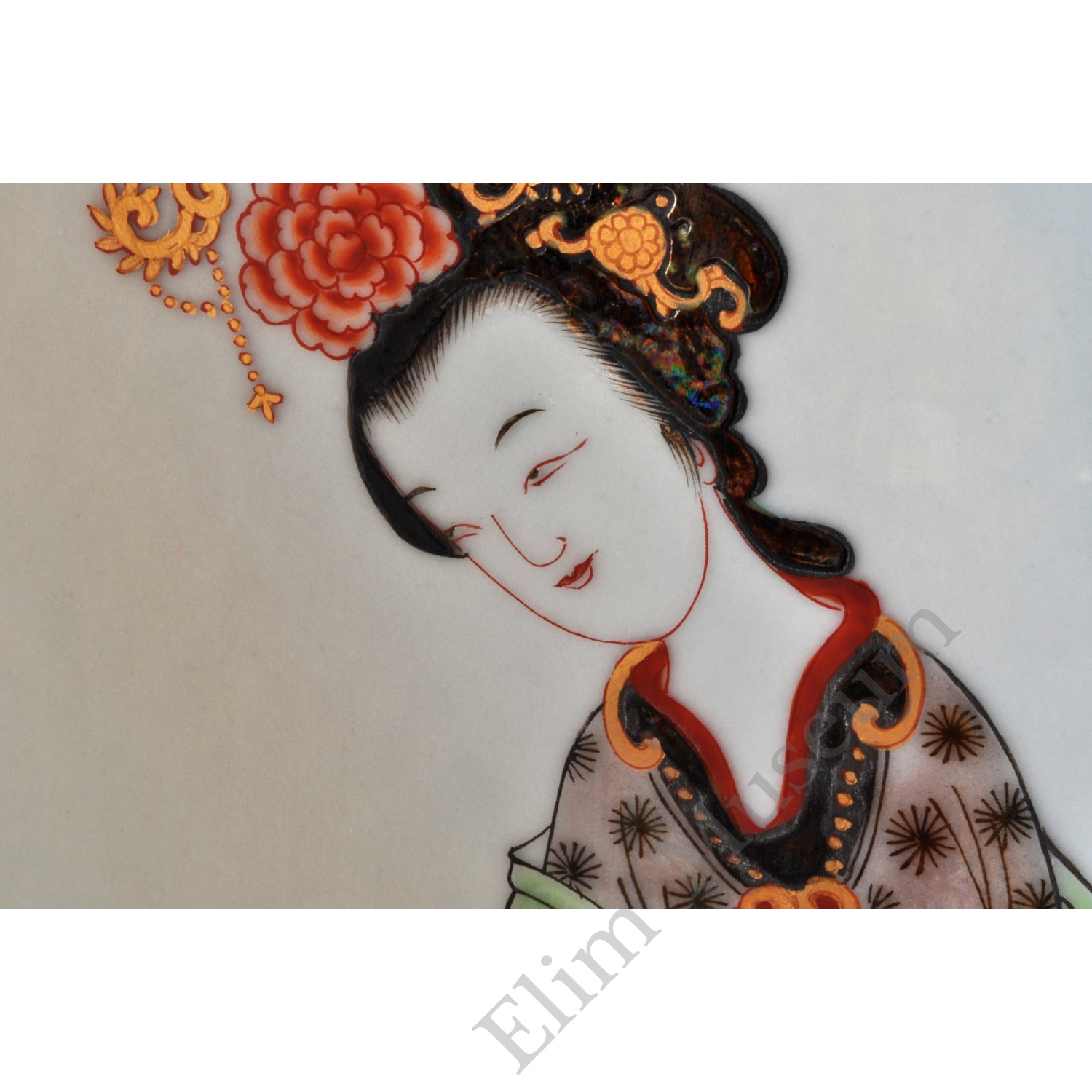
The lady inclines her head, her softened gaze and delicate features conveying quiet attention. Elaborate hair ornaments and a patterned collar frame her face. The Four Arts—music, the board game weiqi, calligraphy and painting—associate feminine elegance with cultivated accomplishment, making the vase a study of both refined portraiture and cultural ideals.
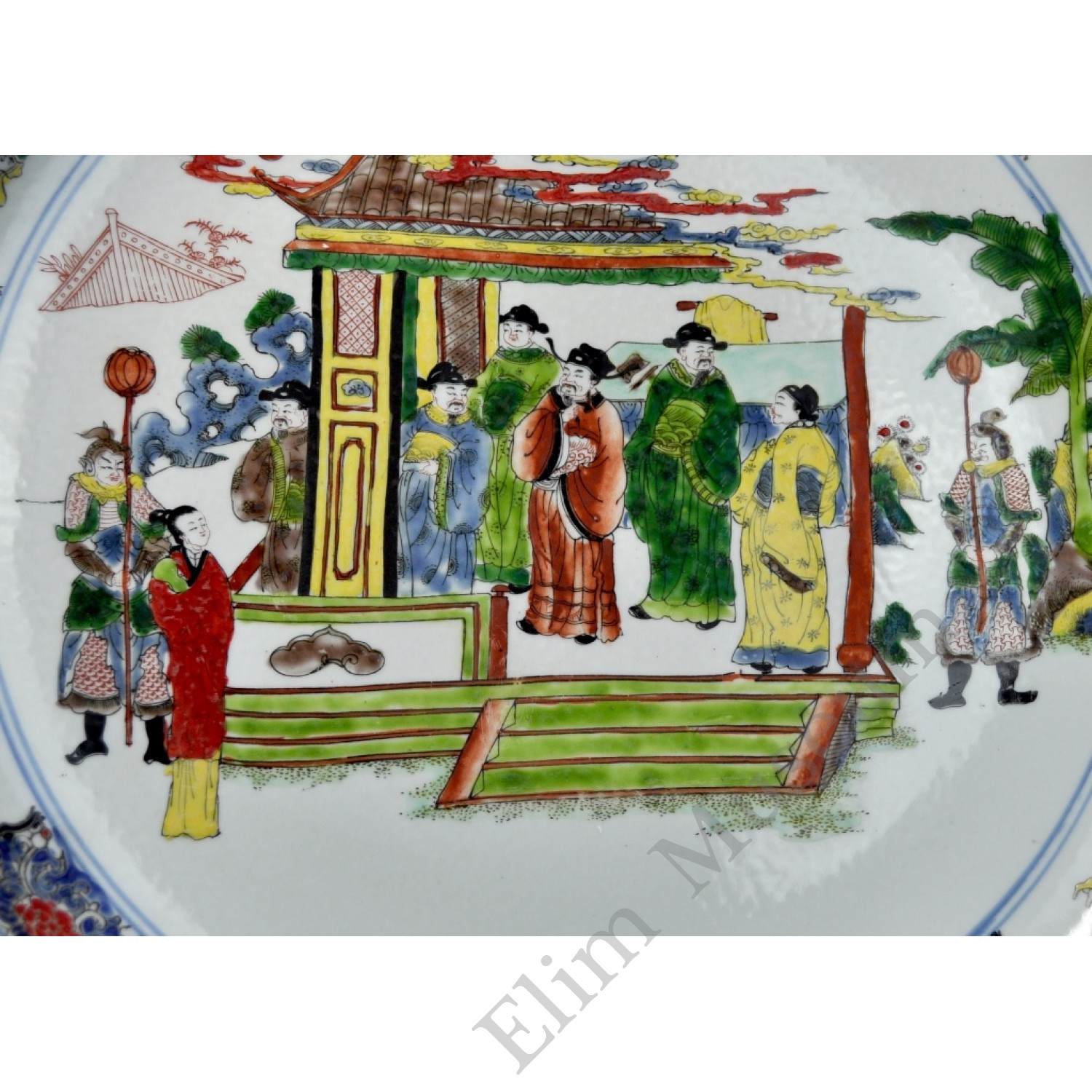
Officials above the steps face a red-robed woman below. Their relatively open poses contrast with her hands held close to her chest, creating the tension of an awaited judgment. Read as a courtroom story, the dish evokes expectations of justice and demonstrates a theatrical arrangement of figures shared by performance, popular storytelling and ceramic painting.
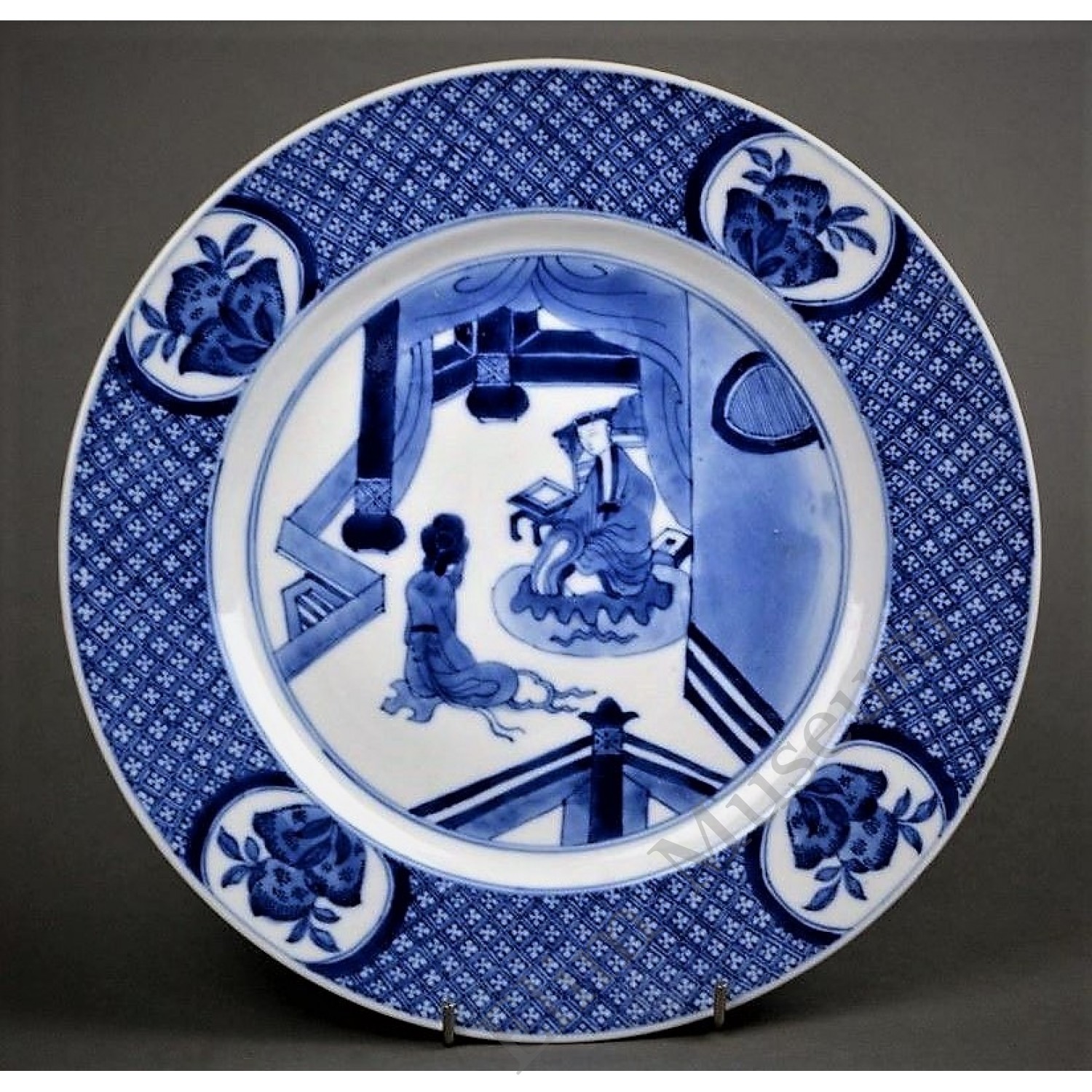
Inside a room, one figure sits while another kneels before them. Their orientation and unequal height establish an emotionally charged encounter, suggestive of pleading, listening or questioning. Under the museum’s Romance of the Western Chamber title, the scene invites reflection on love and social convention, showing how blue-and-white painting condenses dramatic tension.
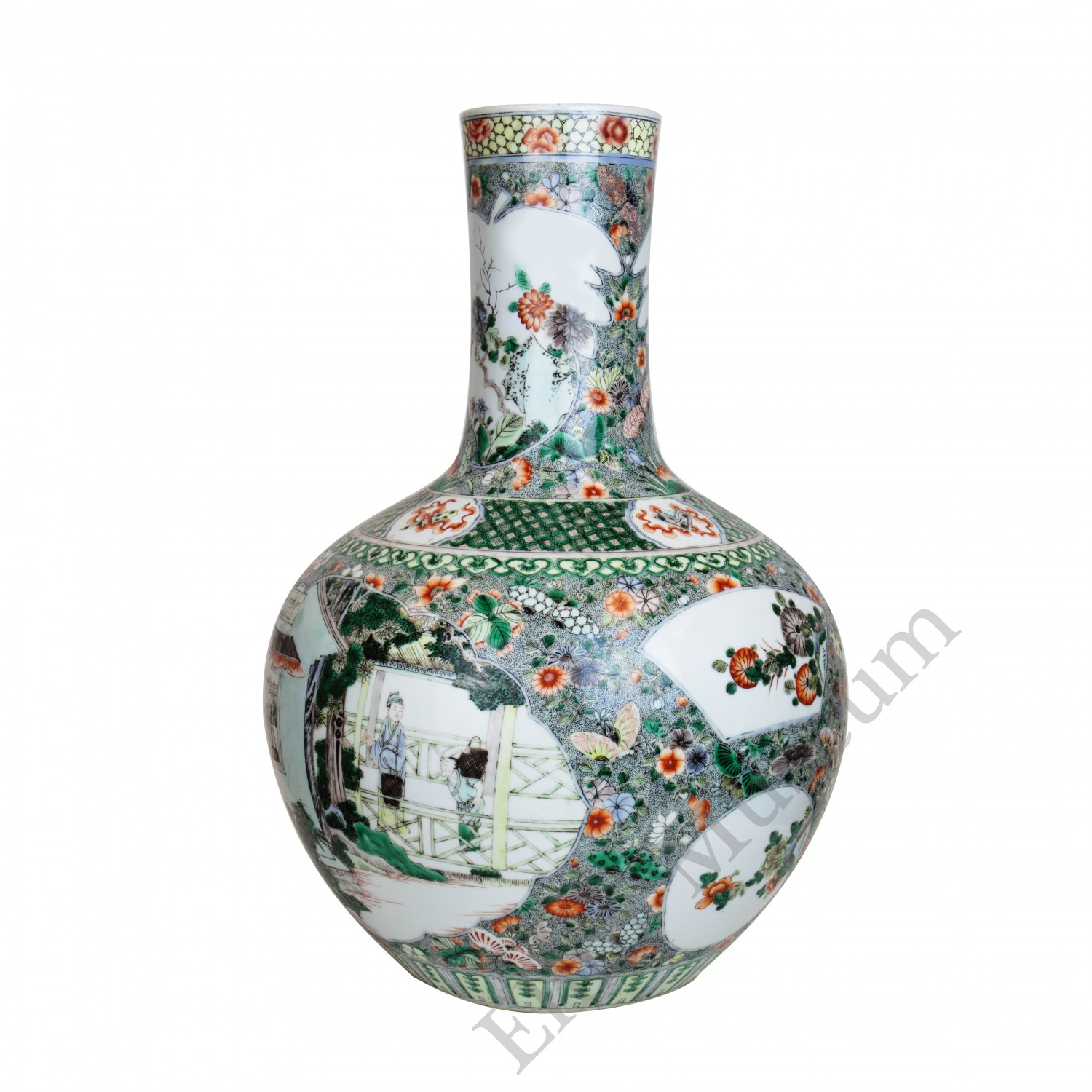
Figures bend, lift and carry baskets in coordinated scenes of work associated with silk production. Their practical movements make labor and its rewards worthy subjects of decoration. Catalogued in relation to the sericulture section of Tiangong Kaiwu, the vase connects technical knowledge and agrarian values with the ornamental language of ceramic painting.
-1500x1500-product_popup.jpg)
The figure stands in carefully arranged dress beside an inscription, inviting the viewer to look and read together. Restrained gestures emphasize identity and bearing rather than dramatic action. The Wushuangpu theme combines images of notable figures with written commentary, showing how porcelain can carry historical memory, judgments of character and informal cultural learning.
30 collection entries are presented; pairs and sculptural groups count as one entry. Titles and dates follow the museum’s existing catalogue. Where records differ, this exhibition uses the confirmed object description without adding an uncertain date or figure identification.
Cultural background references
The Met: Guanyin · The Met: Eight Daoist Immortals · Palace Museum: Touhu · National Palace Museum: Weiqi and the Four Arts · National Trust: Romance of the Western Chamber