
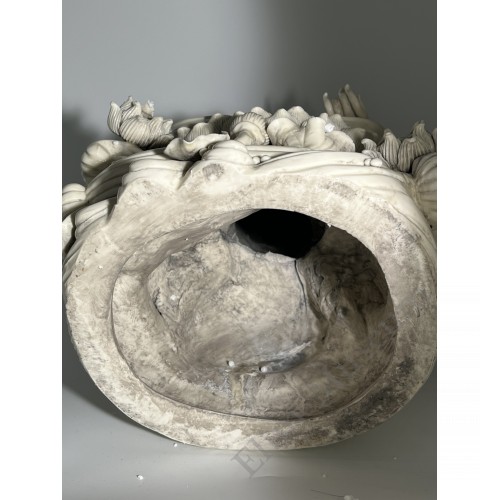
Collection No.: 1799
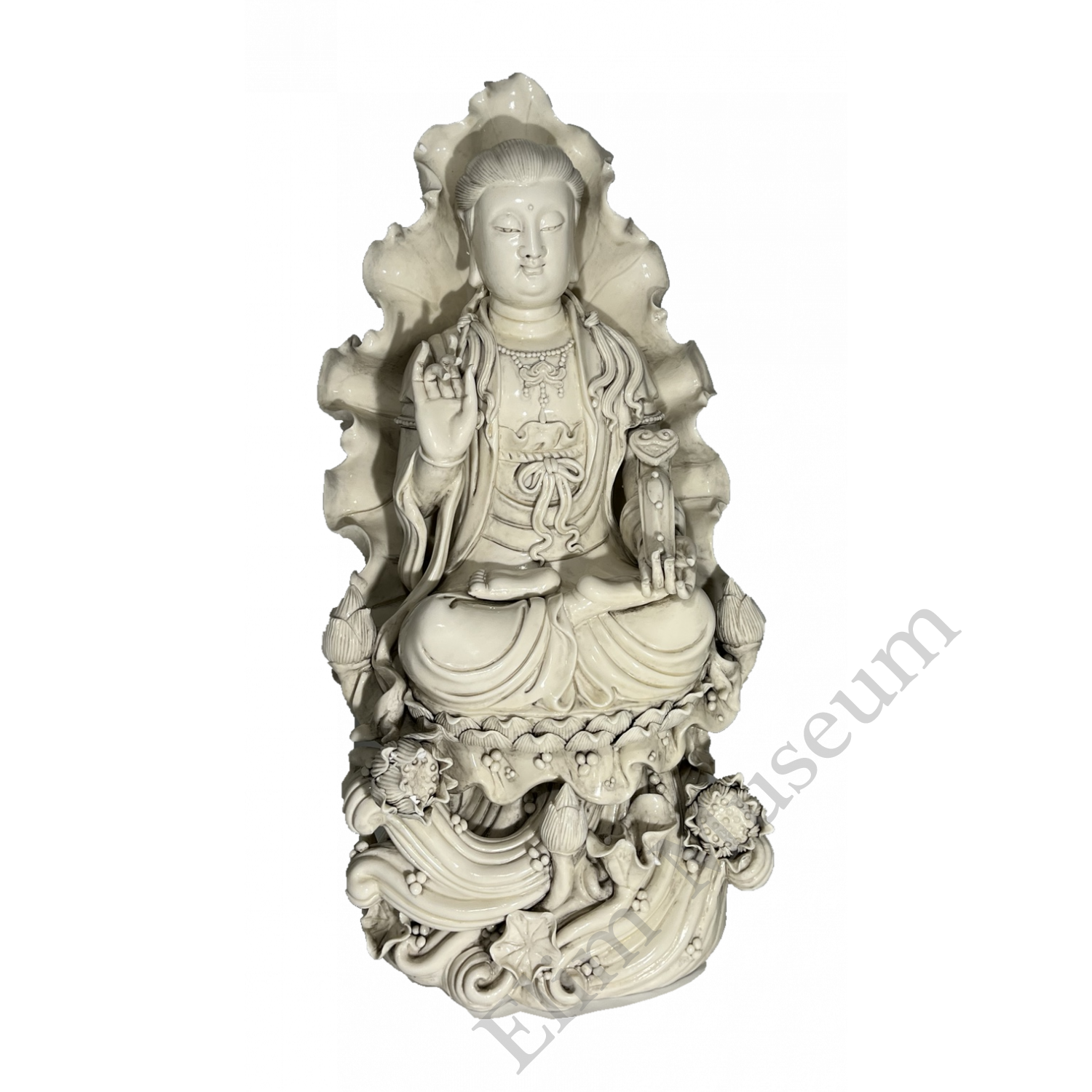
Name: Dehua white porcelain Guanyin sculpture by He Chaozong
Period: Ming dynasty, Wanli reign
Artist: He Chaozong
Kiln: Dehua
Material: White-glazed porcelain
Height: approximately 47 cm
If one were to seek, among representations of Guanyin, a work whose spiritual essence most closely approaches the character of God in Christianity, He Chaozong’s Dehua white porcelain Guanyin would be a compelling choice. It unites compassion and justice, mercy and majesty, creating a profound sense of resonance.
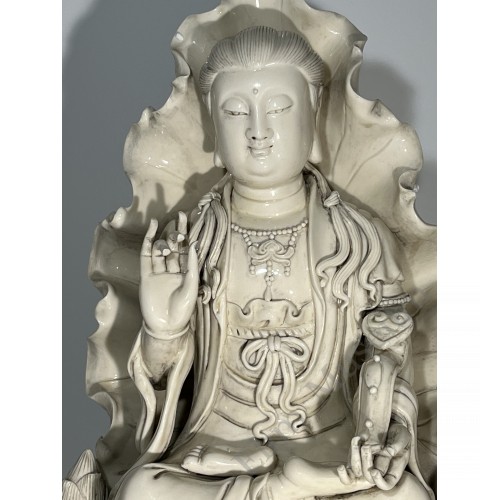
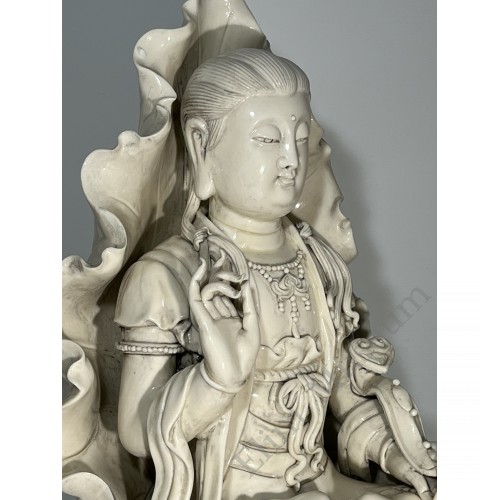
This Guanyin figure is approximately 47 centimeters high. Her eyes are slightly open and lowered, while her lips are gently closed, without a trace of a smile. Her expression is restrained yet complex: solemnity emerges from her compassion, and there even seems to be a hint of anger. She wears a collar around her neck and a jeweled necklace across her chest, with strings of beads and floral ornaments hanging delicately below. The folds of her robes are fluid and richly layered, creating soft variations of light and shadow beneath the warm white glaze. Seated upright on a lotus throne, she presents a striking contrast between her tranquil posture and the waves surging around the base, allowing the overall form to convey solemnity and stability amid turbulence.
What makes her especially distinctive is the arrangement of her hands. Her right hand is turned outward, with the index and little fingers raised, while the thumb lightly presses against the bent middle and ring fingers. In Buddhist tradition, this gesture is known as the “fearless subjugation mudra,” signifying the intimidation and defeat of evil. In her left hand, she holds a ruyi scepter, which in Buddhist tradition symbolizes compassion and tolerance. This strikingly accords with the character of God as described in the Bible, encompassing both righteousness and judgment, mercy and loving-kindness.
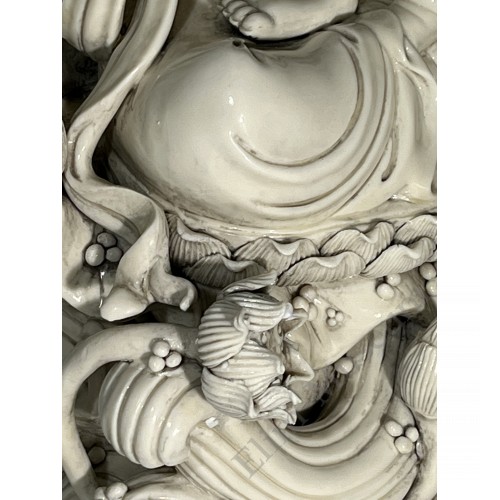
The waves surging in successive layers at the base of the sculpture symbolize human suffering and turmoil. The lotus throne and blooming lotus rising above the waves, meanwhile, suggest a supernatural power of redemption transcending earthly suffering. This, too, resonates with the Christian concept of salvation.
This concept of a redeemer who embodies both compassion and justice calls to mind Jesus in the Bible: one who shows mercy to those who suffer while also judging sin. Through this cross-religious artistic perspective, the work invites us to reflect on suffering, salvation, compassion, and justice.